


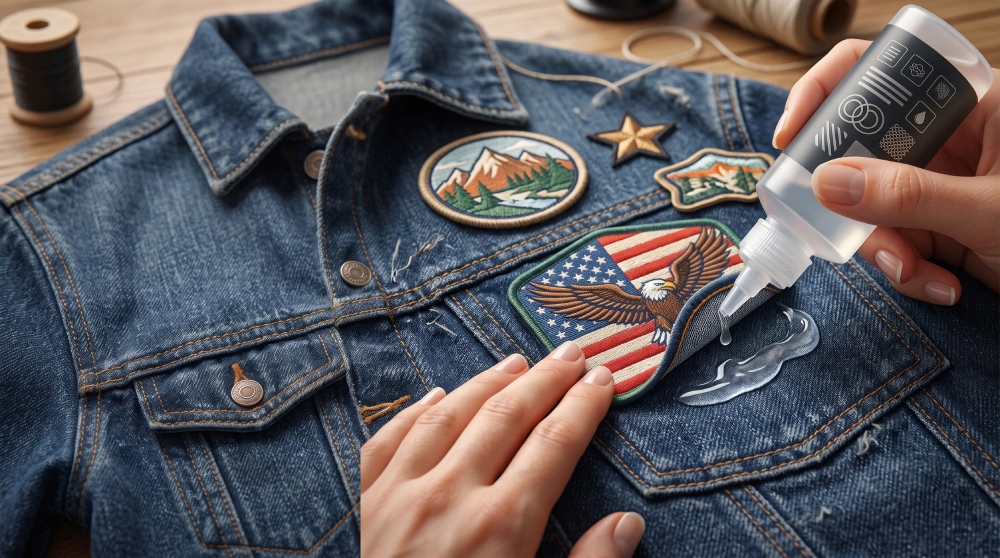
Whether you’re repairing a ripped jacket sleeve, personalizing a denim jacket, or attaching a logo patch to work wear, chances are you’ve looked for fabric glue for patches at some point. This is one of the most frequent questions we get from customers here at Patches Studio. The good news is patch glue can be just as good as a stitch, provided you use the right formula and apply it properly. In this guide we’ll walk you through the different types of adhesive available across the USA, how to pick the right one for your fabric, and exactly how to apply it so your patch stays put after washing.
- No sewing machine or thread needed — just glue, a patch, and a few minutes
- Applicable to a broad spectrum of materials including everyday cotton, leather, and denim
What Is Fabric Glue for Patches?
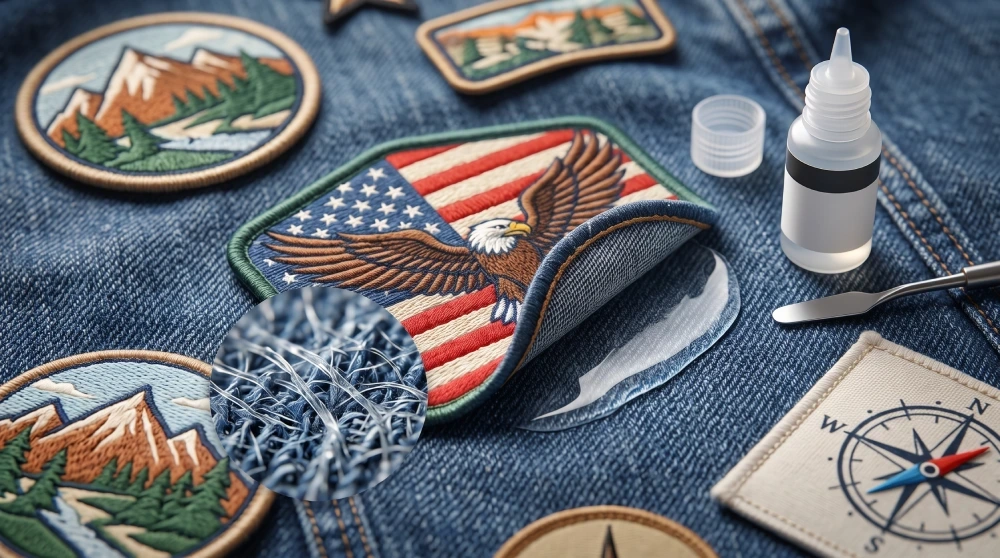
Fabric glue for patches is a specialized adhesive designed to bond fabric to fabric without stitching. Unlike general-purpose craft glue, it’s formulated to flex with the material instead of cracking, and many formulas are also built to survive the washing machine. It’s commonly used for clothes glue for patches on jeans, jackets, backpacks, and uniforms, and it’s a popular no-sew alternative for people who don’t own a sewing machine or simply want a faster fix.
Most bottles labeled as glue for cloth patches fall into a few broad categories — permanent, washable, and heat-activated — each suited to slightly different fabrics and use cases, which we’ll break down below.
How Does Fabric Glue Hold Patches on Fabric?
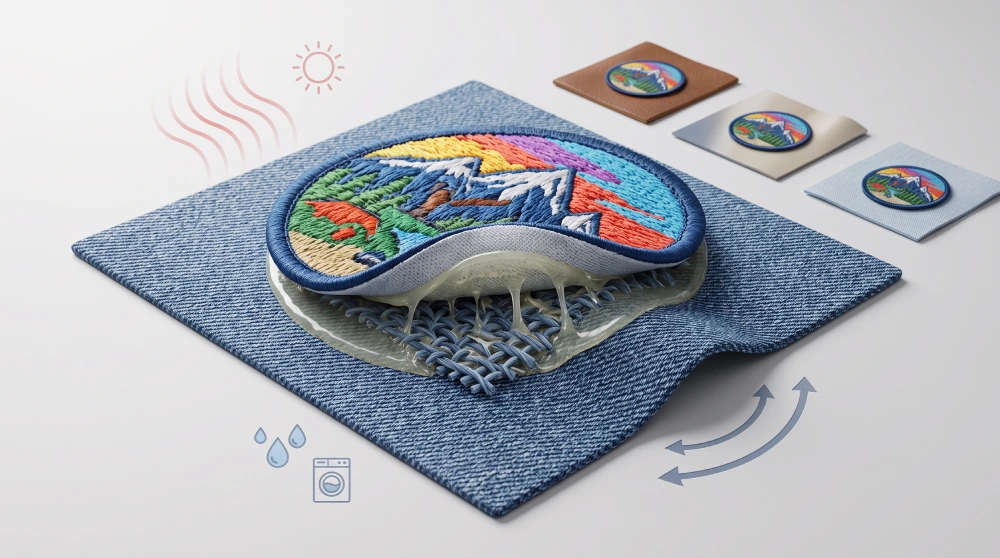
Fabric adhesive penetrates into the fibers of the patch and the base fabric and then cures to a flexible bond as the solvent or moisture evaporates. A good patch fabric adhesive doesn’t just sit on top of the material — it soaks slightly into the weave, which is what allows it to survive bending, stretching and washing without peeling.
The strength of that bond comes down to a few key factors:
- How well the glue penetrates and grips the fibers of both surfaces
- How flexible the adhesive stays once it’s fully cured
- How resistant the formula is to heat, moisture, and repeated washing
- Whether the glue is matched correctly to the patch material (fabric, PVC, or leather)
Rigid glues that don’t flex tend to crack at the edges of the patch first, which is usually where you’ll see peeling begin.
How We Tested Fabric Glue for Patches
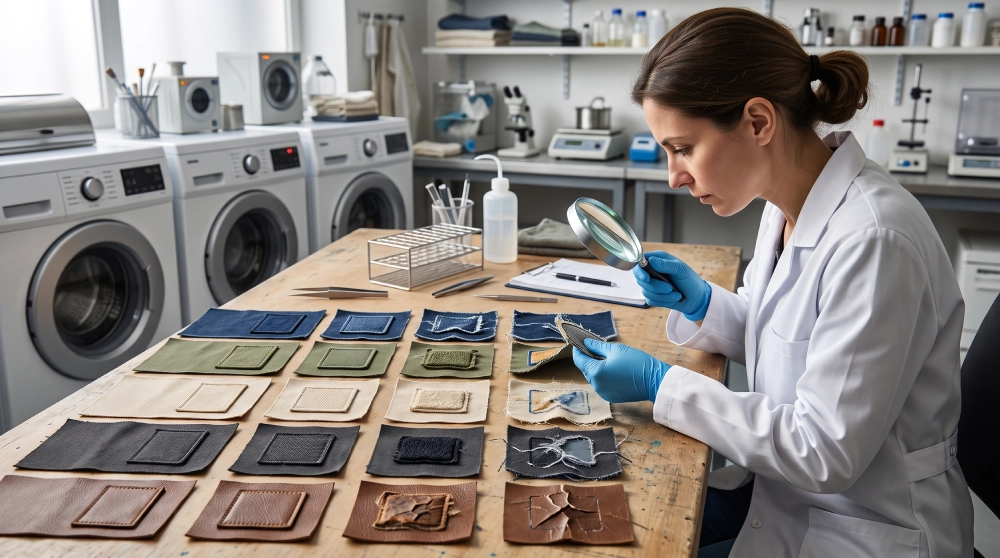
To give you real, practical guidance instead of guesswork, we tested several adhesives across common fabric and patch combinations rather than relying on manufacturer claims alone.
Fabrics and Patch Types We Used
We applied glue for patches on fabric samples including denim, cotton twill, canvas, polyester blends, and leather. Patch types included embroidered, woven, chenille, and PVC patches, since each one behaves differently once glue is applied.
Testing Conditions and Wash Cycles
Each sample was left to cure for the manufacturer’s recommended time, then run through repeated wash and dry cycles on a standard cold-wash, tumble-dry-low setting. We checked for lifting edges, cracking, and discoloration after 5, 10, and 20 washes.
Types of Fabric Glue for Patches
Permanent Fabric Adhesive
This is the strongest option and the go-to choice when you never plan to remove the patch. It creates a rigid, long-lasting bond, though it’s generally less flexible than washable formulas.
Washable Fabric Glue
Formulated specifically to survive machine washing, this type stays flexible after curing so it won’t crack when the fabric moves. It’s a solid middle-ground choice for everyday clothing.
No-Sew Fabric Adhesive
Marketed directly at people avoiding stitching altogether, this category usually dries clear and works well on lightweight fabrics like cotton and polyester blends.
Heat-Activated Adhesive
Applied with an iron, this type is common on fabric glue for iron on patches and bonds through heat rather than air-drying. It tends to create one of the strongest bonds available without sewing.
Flexible Fabric Glue
Designed for fabrics that stretch, like activewear or knits, this formula stays pliable so the bond doesn’t crack under repeated movement.
At Patches Studio, we recommend matching the glue type to how the finished item will be used rather than defaulting to whichever bottle claims to be strongest — a quick comparison makes this easier.
How to Choose the Best Glue for Fabric Patches
Consider the Patch Material
Embroidered and woven patches absorb glue differently than PVC or leather patches, which are non-porous and need a stronger adhesive to bond properly.
Match the Glue to the Fabric
The best glue for patches on fabric depends heavily on what you’re gluing it to. Denim can handle a stronger, more rigid adhesive, while stretch fabrics need something flexible.
Check Wash and Drying Requirements
If the item will be machine washed regularly, prioritize a washable formula over a purely permanent one, even if the permanent version claims a stronger initial hold.
Look for Flexibility and Durability
A glue that dries hard may hold at first but is more likely to crack at the patch edges over time. Flexibility after curing is one of the most overlooked factors when shopping for fabric patch glue.
Best Fabric Glue Products for Patches (Tested and Compared)
Based on our testing, here are the top performers across different categories and needs. (Insert your specific product picks, pros/cons, and affiliate links here — recommend covering: Best Overall, Best for Denim, Best Budget, Best Waterproof, Best for Leather.)
How Much Does Fabric Glue for Patches Cost?
Pricing for fabric glue for patches varies depending on the formula, brand, and bottle size, but most options are affordable enough to try more than one if your first pick doesn’t suit your fabric.
| Glue Type | Typical Price Range | Approx. Cost Per Patch | Best Value For |
| Permanent Fabric Adhesive | $5.00 – $12.00 | $0.15 – $0.45 | One-time, long-term fixes |
| Washable Fabric Glue | $4.00 to $11.00 | $0.30 to $0.55 | Everyday clothing |
| No-Sew Fabric Adhesive | $4.00 to $9.00 | $0.20–$0.45 | Budget-friendly patch jobs |
| Heat-Activated Adhesive (iron-on) | $3.00 to $10.49 | $0.45 to $0.60 | Iron-on patches |
| Flexible Fabric Glue | $3.60 to $6.05 | $0.30–$0.60 | Stretch fabrics |
A single bottle covers on average 10-20 small to medium patches. Much cheaper than taking several items of clothing to professional tailors or for alterations is patching them with fabric glue.
Fabric Glue vs. Sewing for Attaching Patches
Both methods work, but they suit different situations. The table below breaks down how they compare on the factors that matter most.
| Factor | Fabric Glue | Sewing |
| Speed | Fast — ready in minutes to a few hours | Slower — requires threading and stitching time |
| Skill required | Minimal, beginner-friendly | Moderate to high, especially for clean stitching |
| Durability | Good in testing — held through 15–20 washes on average | Excellent, especially with reinforced stitching |
| Flexibility | Varies by formula; can crack if rigid | Naturally flexible with fabric movement |
| Best for | Quick fixes, no-sew garments, temporary use | Long-term wear, heavy-use items, uniforms |
| Takeaway | Best for speed, low cost, and an easy no-sew fix | Best for maximum durability with heavy daily wear |
How to Apply Fabric Glue to Patches
Prepare the Fabric and Patch
- Make sure to wash and dry well before applying any adhesive
- smooth wrinkles so the surface is flat and even
- Make sure the surface is free of dirt, oil or moisture – any residue will weaken the bond.
Make Sure to Use the Right Adhesive
- Apply a thin even layer of glue to the back of the patch for patches on clothes.
- Stay near the edges, but don’t let the glue pool in the middle
- Do not over-apply – too much glue was the number one cause of seepage and stiff patches in our testing
Press the patch down firmly and secure
- Carefully place the patch before pressing – it’s a lot harder to adjust once it’s down
- Apply firm, even pressure over the entire patch, not just the edges
- Hold for the time recommended on the bottle, usually 30 – 60 seconds
Give It Plenty Of Time To Cure Properly
- Allow the adhesive to cure for the full time indicated on the label, which is usually a few hours to 24 hours.
- Do not wash or do heavy activities during this time.
- Don’t Trust Touch Alone — Glue Can Feel Dry on the Surface and Still Be Curing Underneath
Can You Wash Clothes With Glued-On Patches?
Yes, most patches attached with a washable fabric glue can go through the washing machine, but a few precautions help extend their life. Turn the garment inside out, wash on a cold, gentle cycle, and air dry instead of using a high-heat dryer setting when possible. Avoid ironing directly over a glued patch unless the product is specifically heat-resistant.
Mistakes We Made During Testing (And How to Avoid Them)
During our testing, over-applying glue on canvas caused it to seep through the fabric and stiffen a visible area around the patch — a thinner layer solves this. We also learned that skipping the full cure time before washing caused several patches to lift at the corners within the first few washes. Lastly, using a rigid, permanent adhesive on a stretch-knit fabric led to visible cracking after just a handful of wears, which reinforced why matching glue flexibility to fabric type matters more than picking the “strongest” option available.
Best Fabrics for Adhesive Patch Application
Denim, canvas, and cotton twill are among the easiest fabrics to work with since they’re durable and hold adhesive well. Leather is also a strong candidate when using a formula made for fabric glue for leather patches, since standard fabric glue often won’t bond properly to its surface. Stretchy synthetics and delicate fabrics like silk require more caution and a flexible, low-residue adhesive.
- Thicker, tightly woven fabrics generally hold adhesive better than thin or loosely woven ones
- If you’re unsure how a fabric will react, test the glue on a small hidden section before applying it to the full patch
Customers shopping for custom patches through Patches Studio often ask which fabrics hold up best long-term, so here’s a quick reference based on common items sold across the USA:
| Fabric | Adhesive Suitability | Notes |
| Denim | Excellent | Holds strong adhesives well |
| Canvas | Excellent | Durable, minimal seepage |
| Cotton Twill | Good | Works well with most formulas |
| Leather | Good (with leather-rated glue) | Needs non-fabric adhesive |
| Polyester Blends | Moderate | Best with flexible formulas |
| Knits/Stretch Fabric | Moderate | Requires flexible glue only |
| Silk/Delicate Fabrics | Caution advised | Test in hidden area first |
Fabric Glue for Different Types of Patches
Embroidered Patches
The textured backing on embroidered patches holds glue well, making them one of the easier patch types to attach without sewing.
Woven Patches
Woven patches are like embroidered patches but they have a flatter surface. Usually, woven patches need a slightly thinner layer of glue to prevent any visible seepage around the edges.
Chenille Patches
These thicker, fuzzier patches require a more aggressive hold because their weight can pull away from lighter adhesives over time.
PVC and Rubber Patches
Non-porous by nature, PVC patches need a clothing patch adhesive specifically rated for plastic or rubber materials, since standard fabric glue often won’t bond effectively.
Leather Patches
Leather requires an adhesive built for non-fabric surfaces. A general fabric glue may hold briefly but is likely to peel away from leather’s smoother texture.
Expert Tips for a Strong, Long-Lasting Patch
Go thin with the glue — one even layer beats a thick coat every time, since too much tends to seep out and stiffen the fabric around the edges. Test a hidden spot first, especially on darker or more delicate materials, just to be safe. And don’t rush the cure time; even if it feels dry, give it the full window before washing. When picking a glue, flexibility matters more than raw bond strength — the best patch adhesive is the one that moves with your fabric, not just the one that grips hardest.
Ready to Order Your Fabric Glue for Patches?
Send your fabric details or patch type and we’ll help you match the right adhesive — then guide you through application, curing time, and care.
Get your free recommendation today.
Frequently Asked Questions About Fabric Glue for Patches
What is fabric glue for patches?
It’s an adhesive made specifically for sticking patches onto fabric without sewing. It stays flexible once dry, and many fabric glue for patch formulas survive regular washing, which is why people use it instead of stitching.
Is fabric glue permanent?
Depends what you grab. Permanent adhesives are built to stay put for good, while washable and flexible formulas are made more for everyday wear — they’ll hold up fine, just maybe not forever with heavy use.
Can you use hot glue for patches?
You can in a pinch, but it’s not really built for this. Hot glue dries stiff and tends to crack fast once fabric moves or goes through the wash. A real fabric glue holds up better.
Does fabric glue work on leather or nylon?
Not always well. Regular fabric glue tends to slide right off leather or slick synthetics like nylon. You’ll want something specifically labeled for those materials if you actually want it to stick and stay.
How long does fabric glue take to dry?
It’s usually dry to the touch within an hour, but don’t rush it. Give it the full 12 to 24 hours to cure before washing or wearing whatever you just glued.
What is the best fabric glue for patches on denim?
Denim can take a stronger adhesive than most fabrics, so a washable or heat-activated glue works best. It’s thick enough that flexibility issues aren’t as much of a concern as with lighter fabrics.
Can I use fabric glue on a patch I plan to remove later?
Not really — once it’s glued, it’s meant to stay. If there’s a chance you’ll want the patch off later, go with sewing instead. You can unpick stitches without damaging the fabric underneath.
How much does fabric glue for patches usually cost?
You’re looking at roughly $3 to $12 a bottle, and one bottle usually covers 10 to 20 patches — a cheaper route than tailoring, and often better value than a separate best patch adhesive.
Do I need a different glue for PVC or rubber patches?
Yes. PVC and rubber don’t absorb glue the way fabric does, so regular fabric adhesive often just won’t stick. Grab a clothing patch adhesive that’s actually rated for plastic or rubber surfaces instead.
Is fabric glue as strong as sewing?
Depends what you’re using it for. Glue held up fine through 15–20 washes in our testing on everyday fabrics, but for heavy friction — backpacks, uniforms — sewing still holds up longer overall.