Frequently Asked Questions About Custom Patches
Everything You Need to Know About Custom Patches
1. What are the benefits of using custom patches to promote your brand?
Custom patches boost brand identity by providing a 3x higher visual durability compared to standard screen printing, making them a premium and cost-effective marketing tool for clothing brands, uniforms, and corporate merch.
- High Perceived Value: Instantly elevates basic apparel into retail-ready, high-end merchandise.
- Versatility: Easy to apply and transfer across different items like jackets, hats, and backpacks.
- Long-Term Marketing: Resists fading and peeling, ensuring years of passive brand exposure.
2. What are 3D puff embroidered patches used for?
3D puff embroidered patches are specifically used to create bold, raised, and three-dimensional designs on structured apparel like headwear, heavy jackets, and streetwear.
- Visual Depth: Uses an underlying foam layer to lift the embroidery thread, creating a premium tactile feel.
- Primary Applications: Best suited for sports caps (snapbacks/beanies), outerwear branding, and modern urban fashion lines.
Which is better, embroidered patches or PVC patches?
Embroidered patches are ideal for a classic, textured fashion appeal, whereas PVC patches are superior for outdoor and heavy-duty use due to their 100% waterproof and mud-resistant durability.
- Choose Embroidery For: Intricate traditional designs, corporate uniforms, luxury fashion, and a classic vintage aesthetic.
- Choose PVC For: Tactical gear, police/fire departments, sports teams, and rugged outdoor equipment exposed to harsh weather.
What are patches made of silicone?
Silicone patches (often grouped with soft-rubber or flexible PVC) are lightweight, eco-friendly branding elements made from soft silicone rubber that offer extreme flexibility and high resistance to heat and chemicals.
- Texture & Feel: Exceptionally smooth, flexible, and matte-finished compared to standard rigid plastics.
- Best Used For: High-performance sportswear, swimwear, medical uniforms, and minimalist premium apparel.
Which is better, printed combo patches or embroidered patches?
Printed combo patches are better for complex artwork with fine gradients and photograph-like details, while embroidered patches are superior for clean logos that require a traditional, rich thread texture.
- Printed Combo Advantage: Combines a sublimated base with embroidered edges, capturing 100% of photographic details without losing the classic patch border.
- Embroidered Advantage: Best for vector logos, providing distinct depth and a premium raised thread feel.
Can I buy a lot of custom PVC patches at once?
Yes, you can order custom PVC patches in wholesale bulk quantities at Patches Studio, featuring scalable tiered discounts, low minimum order quantities (MOQs), and zero setup fee options.
- Bulk Benefits: Significant price reductions on batches of 100, 500, or 1,000+ units.
- Turnaround: Strict quality control checks with fast, tracked global shipping directly to your facility or business address.
What are the benefits of using DTF sheets?
DTF sheets provide exceptional apparel branding flexibility because they allow full-color, high-definition designs to be heat-pressed onto almost any fabric type, including cotton, polyester, nylon, and blends.
- Unmatched Detail: Perfectly replicates complex graphics, shadows, and vibrant gradients.
- Production Efficiency: Fast application times with excellent washability and resistance to cracking or stretching over time.
Is there a special deal on custom patches?
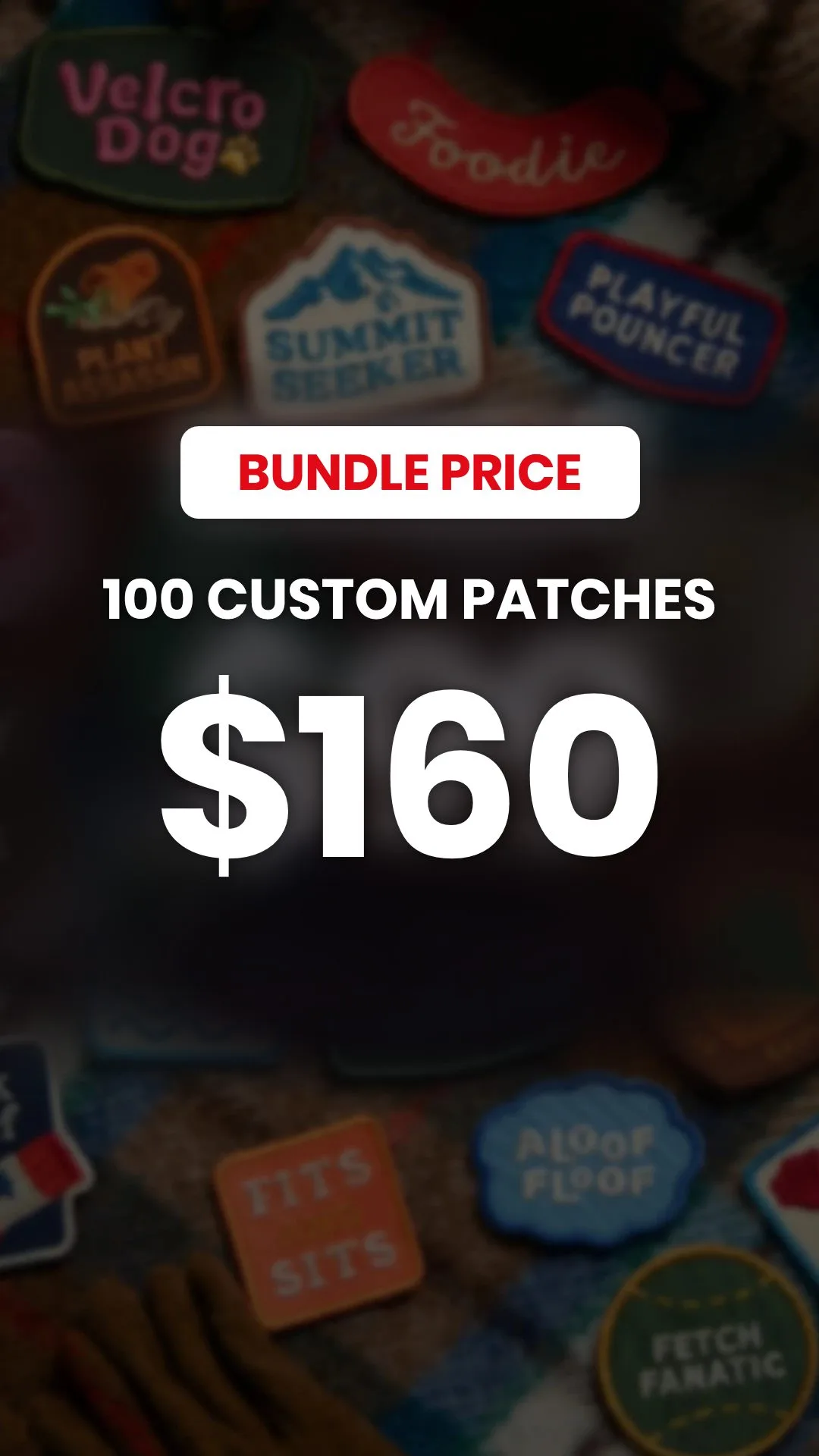
Yes, Patches Studio currently offers an exclusive limited-time bundle package where you can get a complete set of custom patches starting at competitive low rates (such as 100 custom patches for just $160, including free USA shipping).
- Who It’s For: Ideal for startups, emerging clothing brands, community clubs, and businesses looking for low-cost, high-yield promotional items.
Do 3D puff embroidered patches work on all kinds of fabric?
No, 3D puff embroidery does not work well on thin, lightweight, or highly elastic fabrics because the high stitch density and heavy foam core can cause the fabric to pucker, sag, or tear.
- Recommended Fabrics: Works best on thick, structured materials such as heavy cotton canvas, denim, wool blends, structured caps, and thick outerwear.
Where may you utilize custom patches?
Custom patches can be utilized across a wide variety of promotional, professional, and personal gear, including corporate uniforms, lifestyle apparel, sports team jerseys, backpacks, and promotional giveaways.
- Application Areas: Popularly applied to the chest or sleeves of hoodies, front panels of trucker hats, tactical gear Velcro patches surfaces, and branded merchandise bags.
Can you put silicone patches on things outside?
Yes, silicone patches are specifically engineered for outdoor use as they are entirely waterproof, UV-resistant, and won’t crack, fade, or degrade under prolonged exposure to extreme sun, rain, or freezing temperatures.
- Ideal Industries: Extensively used by marine brands, snowboarding companies, tactical outdoor suppliers, and athletic outerwear labels.
What is the difference between patches made of real leather and fake leather?
Real leather patches offer a genuine, high-end look that develops a natural patina and lasts for decades, while synthetic leather (faux/vegan leather) is more cost-effective, environmentally uniform, and easier to wash.
- Real Leather: Premium price point, organic wood/earthy smell, completely unique grain patterns on every single patch.
- Synthetic Leather: Vegan-friendly, highly consistent color and texture matching, excellent moisture resistance, and budget-friendly for large production runs.