

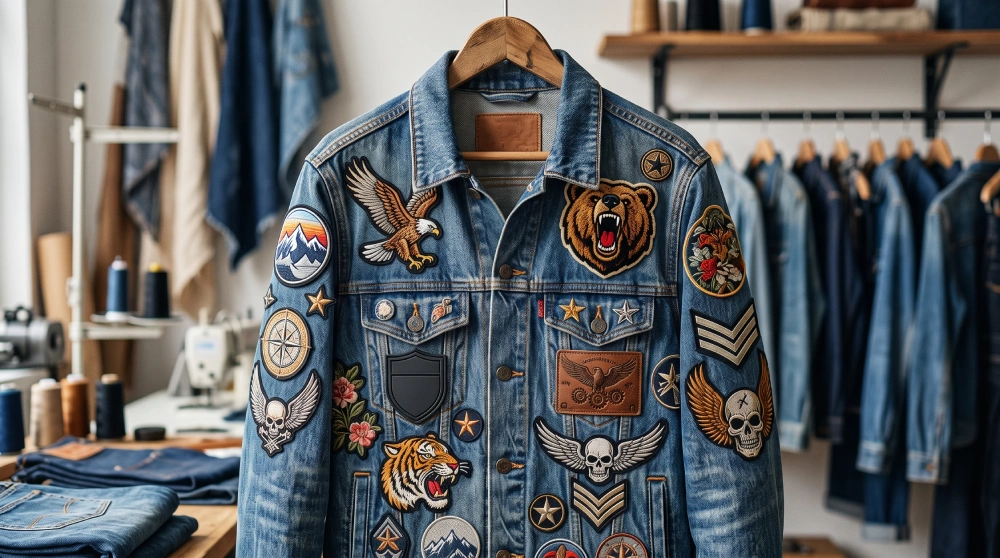
Walk into any thrift store and you’ll spot them instantly — jackets covered in patches for jackets that tell a story before the wearer says a word. A band patch on the sleeve, a faded military badge near the collar, a hand-sewn logo over the heart — we see the full range of what people build over the years. Jacket patches have been around for decades, but they’ve never really gone out of style.
Whether you’re fixing a hole, showing off a hobby, or building a look from scratch, a patch jacket is one of the easiest ways to make a plain garment feel like yours. This guide from Patches Studio, a custom patch maker based in the USA, covers every material, size, and attachment method you’ll need to know before your next patch project.
What Are Patches for Jackets?
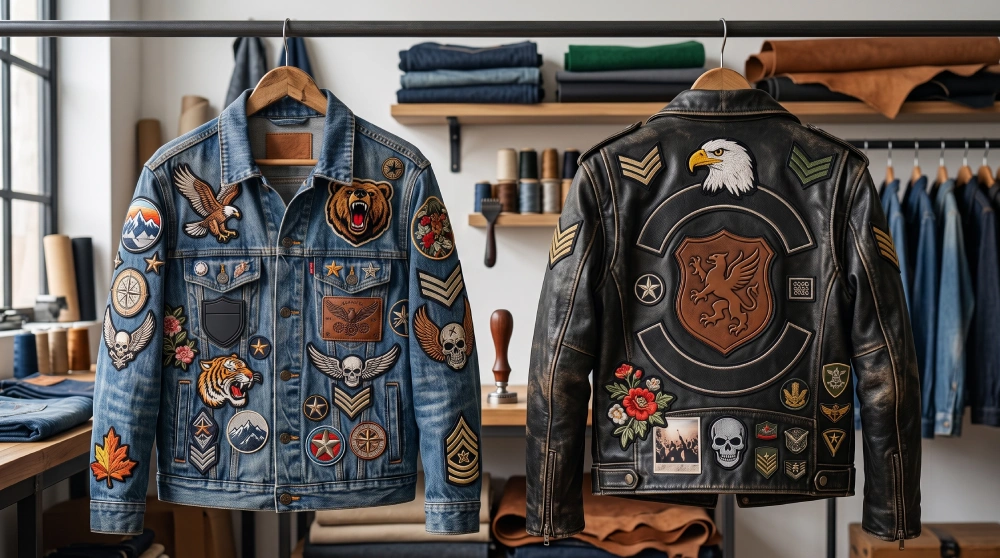
A jacket patch is a piece of fabric, often embroidered or printed, that’s attached to the outside of a jacket to add decoration, cover damage, or display a design.
Some people buy a jacket with patches already sewn on; others start with a blank denim or leather piece and build it up over time. Either way, jackets covered in patches have become their own kind of fashion statement, especially in biker, punk, and vintage streetwear circles.
Common Uses for Jacket Patches
People add a patch for a jacket for a handful of reasons: to represent a club or group, to cover a rip or stain, to show support for a band or cause, or simply because a plain jacket felt like it needed personality. Military and workwear traditions also use patches to display rank, unit, or company branding.
Popular Jacket Patch Materials
Most patches fall into a few material families — twill, felt, chenille, PVC, and leather. Each one changes how the patch looks and feels, and some hold up to weather and wash far better than others, which matters more than people expect once a patch has been on a jacket for a year or two.
Types of Patches for Jackets
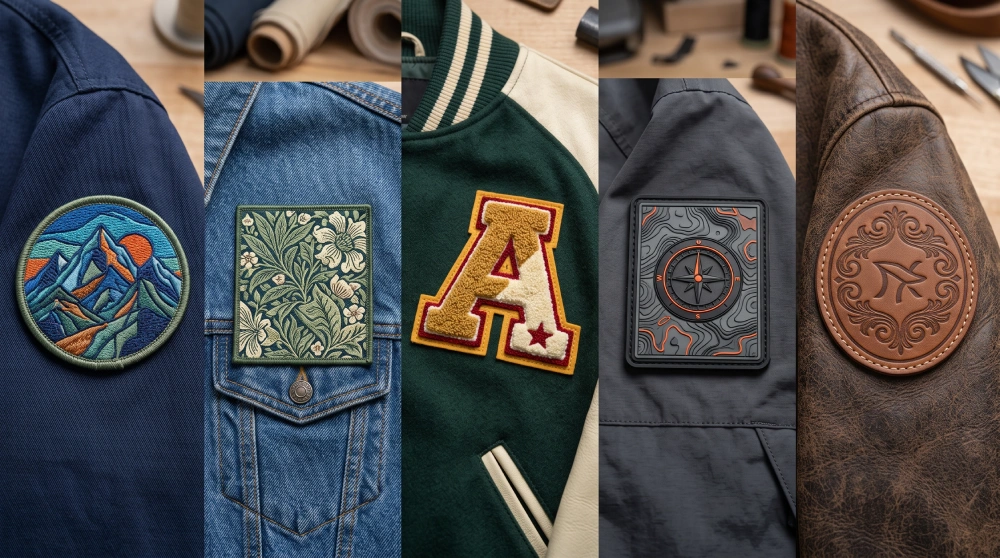
Not all patches are built the same, and picking the wrong type for your jacket is one of the most common regrets people run into. Here’s a rundown of the main options.
Embroidered Jacket Patches
Embroidered jacket patches are the classic choice — raised, textured stitching that gives a design real depth. This is the style most people picture when they think of a biker or military patch.
They’re usually made using embroidery patches for jackets techniques where thread is stitched directly onto a twill backing.
Woven Jacket Patches
Woven patches use thinner thread woven flat into the fabric, which makes them better suited for small text or fine detail that embroidery would blur out.
Chenille Jacket Patches
Chenille patches have a fuzzy, almost velvety texture. You’ll see these most often on varsity and letterman jackets, where bold lettering needs to stand out from a distance.
PVC Jacket Patches
PVC patches are made from a rubbery, molded material. They’re waterproof, flexible, and tend to survive outdoor and tactical use far longer than fabric-based patches.
Leather Jacket Patches
Leather patches are stitched or riveted directly onto leather jackets, matching the material for a seamless, worn-in look that ages well.
How to Choose Patches for Your Jacket
There’s no single “best” patch — it depends on what you’re putting it on and how it’ll be used.
Choose the Right Material
If you want something that’ll take a beating outdoors, PVC or embroidered patches on jackets tend to outlast felt or thin woven options.
Select the Right Size
A patch jacket with mismatched proportions, like tiny patches scattered over a huge back panel, rarely looks intentional. Measure the space first.
Pick the Best Backing
Iron-on is fine for lightweight fabrics you won’t wash often. Sew-on or hook-and-loop makes more sense for anything that’ll go through a washer regularly or take a lot of movement.
Match the Patch to the Jacket Fabric
Leather and heavy canvas can handle iron-on heat without issue. Thin nylon or waterproof shells usually can’t, so sewing or adhesive backing is the safer route for unique patches on those materials.
Consider the Material’s Texture and Finish
This is also where decorative patches for clothing made from PVC shine, since they don’t rely on heat at all.
Jacket Patch Sizes
Patch sizes generally run from small emblems up to extra large patches for jackets that cover most of the back. Some suppliers also list these bigger options as huge patches for jackets or large iron on patches for jackets, though the sizing is the same either way.
| Size | Typical Dimensions | Common Use |
| Small | 1″–3″ | Sleeves, chest logos |
| Medium | 3″–5″ | Front, shoulder |
| Large | 5″–8″ | Back panels |
| Extra Large / Huge | 8″+ | Full back patches, statement designs |
Where to Place Patches on a Jacket
Jackets with patches usually mix a few spots at once — small logos and emblems up top, with bigger statement designs saved specifically for the back panel.
- Chest Placement: Best for logos or small emblems.
- Sleeve and Shoulder Placement: Good for smaller patches or badges.
- Back Placement: Reserved for the biggest, boldest designs.
- Denim Jacket Badges: Badges for jackets sit near the chest pockets or collar.
- Appliqués: Larger cutouts sewn directly into the design.
Patches For Jackets Backing Options
Each backing type trades off speed, strength, and flexibility differently, so the right pick for patches for jackets depends on how the jacket gets worn and washed.
| Backing Option | Ease of Application | Durability | Removable |
| Iron-On | Easiest — no tools beyond an iron | Medium | No |
| Sew-On | Moderate — needs basic stitching | High | No (without unpicking) |
| Hook-and-Loop | Easy — no heat or thread needed | Medium-High | Yes |
Patch Care & Durability
Washing a Jacket With Patches
Turn the jacket inside out and wash it on a cold, gentle cycle. Hot water and aggressive spin cycles are the main reason patches on coat fabric peel or fray early.
Preventing Peeling and Fraying
A thin line of fabric glue around the edges adds extra insurance, especially on coat patches that see daily wear. Avoid the dryer when possible — air drying protects both the patch and the adhesive backing underneath it.
Signs a Patch Needs Replacing
- Edges are fraying or lifting away from the fabric
- Colors have visibly faded from repeated washing
- Adhesive backing feels loose or crackly to the touch
- Stitching has come undone in one or more spots
- The patch no longer lies flat against the jacket
Custom Patches for Jackets
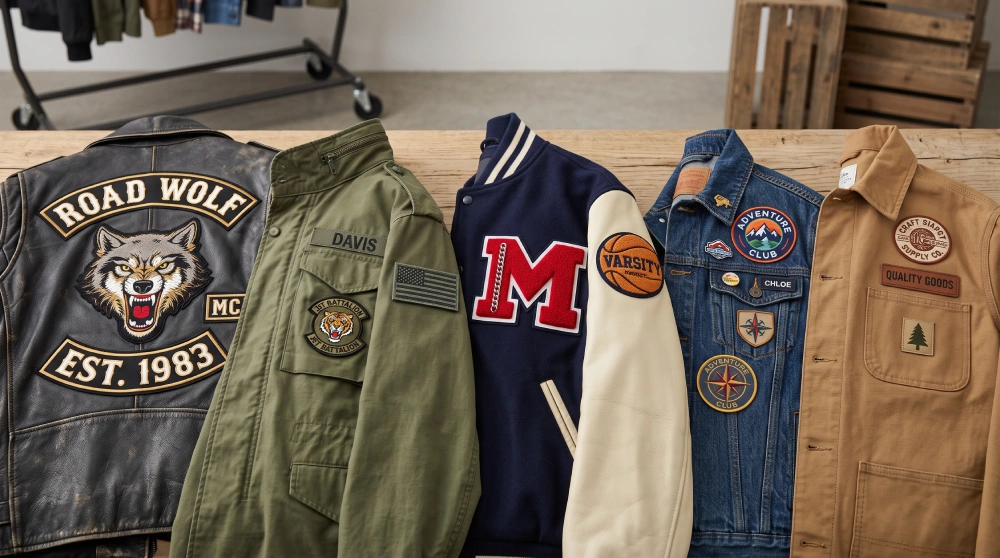
Custom patches let businesses, clubs, teams, and riders personalize jackets with logos, names, ranks, or emblems. From embroidered designs to chenille lettering, each style serves a distinct purpose and audience.
Custom Logo Patches
Brands, clubs, and creators order custom logo patches to brand jackets, uniforms or merch drops with their own artwork, in embroidered, PVC or woven styles.
Name and Letter Patches
Names and letters are often visible in patches on work uniforms and letterman jackets, typically using a bold, easy-to-read font to ensure they are seen.
Biker Jacket Patches
Biker jacket patches have very specific rules about where the club name, rank and chapter location should be within riding clubs.
Military Jacket Patches
Military jacket patches represent rank, unit, or service branch, typically made with embroidered or woven construction for durability and regulation accuracy.
School and Team Jacket Patches
For letterman jackets, patches for school and team jackets are ordered in bulk, and often a combination of chenille lettering and embroidered sports and achievement emblems are used.
How Much Do Jacket Patches Cost?
Pricing depends on size, complexity and material. Larger quantities are more economical per patch Metallic thread or multiple colors in addition to base price.
| Order Type | Price Range (per patch) | Notes |
| Single custom patch | $8.00 – $15.00 | Higher per-unit cost |
| Small Bulk (25–50) | $3.00 – $6.00 | Local Clubs, Events |
| Medium Bulk (100–250) | $1.50 – $3.00 | Most popular tier |
| Large Bulk (500+) | $0.80 – $1.50 | Best for teams, schools, brands |
Pricing varies by supplier and design complexity — use this as a general planning guide.
How to Order Custom Jacket Patches
Submit Your Designs
Upload your artwork or describe the design you have in mind. Most patch makers can work from a rough sketch if you don’t have finished artwork.
Choose Size, Material and Backing
Decide on dimensions, pick a material (embroidered, woven, PVC, etc.), and choose your backing type based on how the patch will be used.
Review Your Digital Proof
Before production starts, you should receive a digital mockup to review colors, sizing, and layout.
Approve and Start Production
Once approved, production begins — bulk orders take longer than single patches. Want exact colors, sizing, and artwork instead of a generic multipack? Go custom. Need something fast off-the-shelf? Craft stores and online marketplaces are your quickest option.
Why Choose Patches Studio for Jacket Patches
We handle everything from free artwork setup to production, with no minimum order size required — whether you need one patch or five hundred, the process stays the same. Every order includes a digital proof before stitching begins, so there are no surprises when your patches arrive.
At Patches Studio, every order is produced in the USA, giving you consistent quality and faster turnaround than overseas suppliers can offer.
Ready to Order Your Custom Jacket Patches?
Send your artwork or describe your design and we’ll help you match the right material, size, and backing — then guide you through the proof, production, and delivery.
Get your free quote today.
Frequently Asked Questions About Patches For Jackets
What are patches for jackets?
A jacket patch is a piece of fabric, often embroidered or printed, attached to the outside of a jacket to add decoration, cover damage, or display a design like a logo or emblem.
What materials are jacket patches made from?
Most patches fall into a few material families — twill, felt, chenille, PVC, and leather. Each one changes how the patch looks, feels, and holds up to weather and wash over time.
What are chenille and PVC patches used for?
Chenille patches have a fuzzy, velvety texture that you’ll often see on varsity and letterman jackets, while PVC patches are waterproof and flexible and are made to last far longer in outdoor and tactical use.
Where do I put patches on a jacket?
The chest and shoulder spots are perfect for logos or small badges, while the back panel is the place for the biggest, boldest statement designs that require more visual space.
What size jacket patch do I need?
Small (1″–3″) for sleeves and chest logos, medium (3″–5″) for front or shoulder placement, and large or extra-large (5″+) for back panels and full statement designs.
Which backing type is best for jacket patches?
Iron-on is best for lightweight fabrics that you don’t wash often. Sew-on is more durable for regular wear, and hook-and-loop skips heat and thread, and is removable.
Can you iron patches on leather jackets?
No. Leather and heavy canvas can withstand the heat of an iron-on, but leather patches are best sewn or riveted and will give a secure, seamless, long-lasting hold.
How do I wash a jacket with patches without damaging them?
Turn the jacket inside out and wash on a cold, gentle cycle. Avoid the dryer when possible — heat and aggressive spinning are the main causes of peeling and fraying.
Is there a minimum order for custom jacket patches?
Not at Patches Studio — you can order one patch or five hundred, and the process stays exactly the same from design through final production, every single time.