

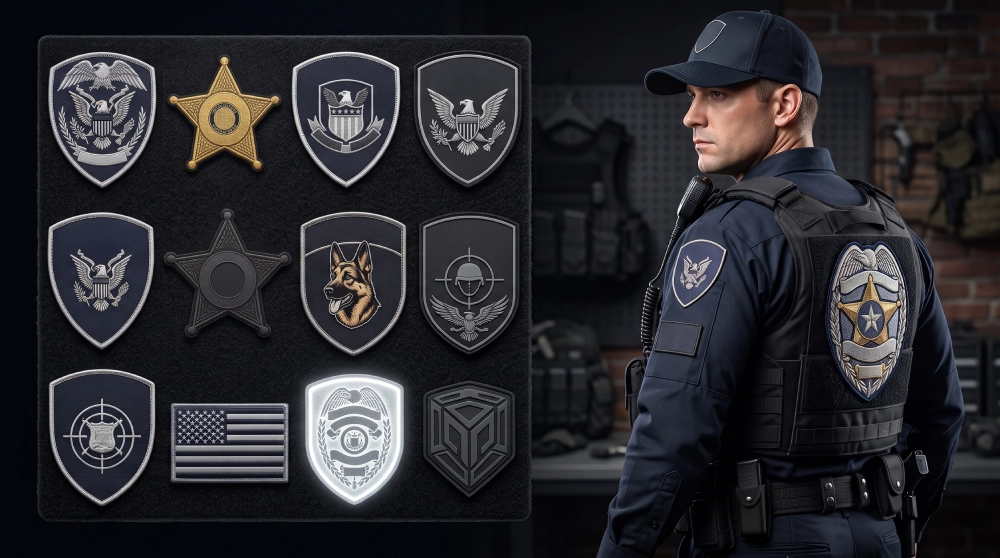
Every patch on a duty uniform tells you something before an officer ever says a word. Rank, unit, agency, sometimes even a K9 partner’s name — it’s all stitched or pressed onto fabric that has to survive rain, sweat, sun, and years of wear. If you’re outfitting a department, a security unit, or a specialty team, getting the patch right matters more than most people outside the industry realize. At Patches Studio, this guide walks through what custom police patches actually are, where they go on the uniform, which materials hold up best in the field, what they typically cost, and what we’ve learned after years of making them for real agencies.
What Exactly Are Custom Police Patches?
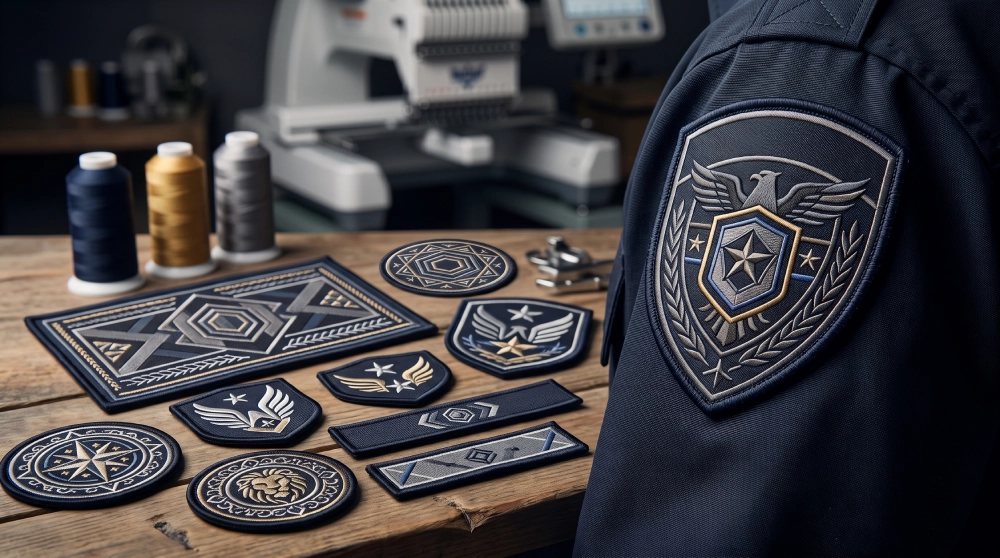
A custom police patch is built to an agency’s exact specification — its seal, badge number, unit name, or motto — rather than pulled off a generic shelf. Searches for police patches, patches police, law enforcement patches, sheriff vest patch, and police department patch all point to the same thing: a durable emblem meant to hold color and legibility for years. Agencies submitting a police department patch request, browsing police patches for sale, or looking to buy police patches online want a design matching their police uniform patch standard in a wear-ready material.
Common types include shoulder patches (or a small police patch for caps), custom police back patches, custom police ID/name patches, the blue line patch, law enforcement morale patches, American police patches, and low-visibility black police patches each suited to a different placement on the uniform or gear.
How Police Patches Are Used in the Field
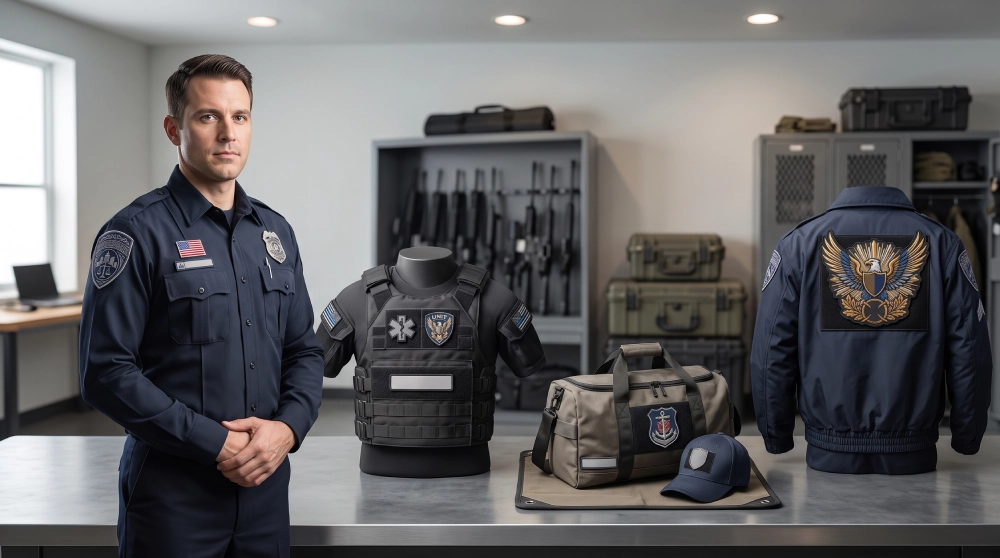
A patch isn’t just decoration — on a working uniform, it’s functional. It has to be visible at a glance, durable under movement, and consistent across every officer so identification stays uniform across the force.
On Uniforms and Vests
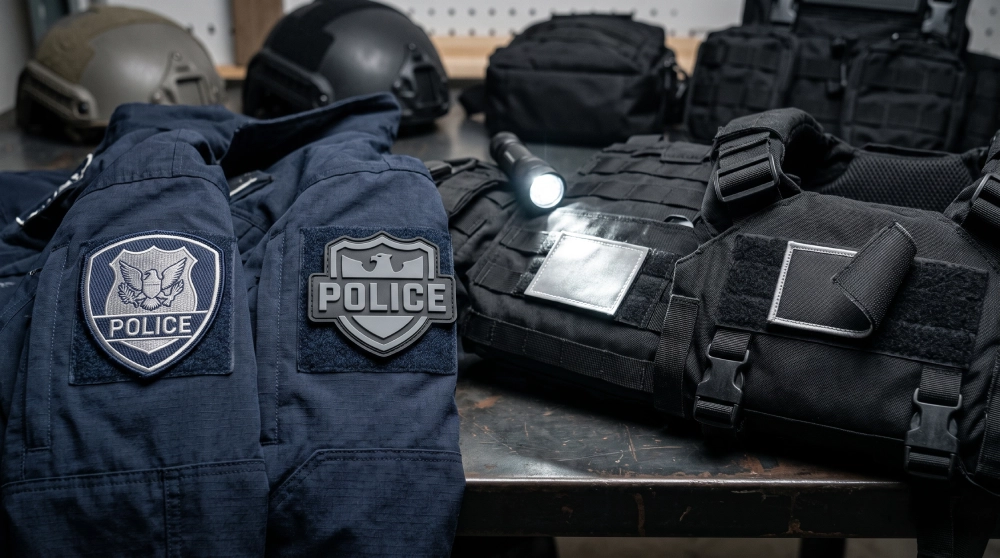
- Custom police uniform patches go on both sleeves, just below the shoulder seam
- The seal or crest civilians recognize first, identifying the agency
- Vests often repeat the identifier on a smaller patch for visibility under an outer layer
On Tactical and Body Armor
- Plate carriers carry more patches than a standard shirt, almost always Velcro-backed
- Officers can swap patches and update unit designations without re-stitching
- Sheriff velcro patches fit the hook-and-loop panels standard on body armor
On Outerwear and Back Panels
- Jackets and raid shells carry a large back patch POLICE or SHERIFF in bold lettering
- Built to be read from a distance, at speed, and in low light
On Gear Bags, Hats, and Accessories
- Lower-stakes placements with more flexibility
- Departments ordering bulk police patches often add a police iron on patch here
- Where funny or unit-specific designs tend to appear
Patch Placement Guidelines by Gear Type
Placement isn’t arbitrary — most agencies follow a placement standard so every officer looks consistent in the field and in photos, and so patches don’t interfere with holsters, straps, or movement. Good law enforcement patch design accounts for placement from the start, since a design that looks great on a flat proof can crowd a collar or overlap a strap once it’s actually sewn onto gear.
Chest and Shoulder Placement
Shoulder patches sit one to two inches below the shoulder seam, on both sleeves. Chest ID patches sit above the pocket line, high enough to read and clear of the collar. On vests, they go on the strap panel or front placard, wherever PALS webbing allows.
Back Panel Placement
Back patches center across the upper back, with lettering just below the collar line, filling the largest flat panel on a vest for visibility from behind.
Hat and Cap Placement
The front panel is standard for a department crest or smaller shoulder-patch version. Side panels sometimes hold a secondary patch, but front-and-center stays the most legible choice.
Choosing the Right Material for Your Use Case
Material choice comes down to where the patch lives and how much abuse it needs to survive — there’s no single “best” material, only the right one for the gear it’s going on.
Custom Embroidered Police Patches
The traditional choice for shoulder patches and department seals. Stitched thread on a twill backing reads as formal and official. Embroidered police patches hold up well to washing, though fine detail can get lost in thread.
Custom PVC Police Patches
Molded rubber, waterproof, and fray-resistant, with colors that stay saturated in rough conditions. Increasingly used for K9 unit patches and back patches that need to shrug off mud and rain.
Custom Reflective Police Patches
Use a light-catching backing so an officer stays visible to headlights and flashlights at night. Common on outerwear and back panels where nighttime visibility is a safety issue.
Custom Velcro & Sheriff Velcro Patches
Not a separate material so much as a backing system, built for hook-and-loop panels on tactical gear. Sheriff velcro patches let officers swap or update patches without sewing — useful for changing assignments or undercover work.
Police & Uniform Patch Sizing Guide
Sizing depends entirely on placement and purpose. As a general reference:
- Shoulder patches: 3–4 inches wide, matching standard uniform sleeve panels
- Small ID/name patches: 1–2 inches, sized to sit above a chest pocket
- Back patches: 10×4 inches or larger, for legibility at a distance
- Hat patches: 2–3 inches to fit a cap’s curved front panel
- Morale patches: 2×3 to 3×2 inches, sized for hook-and-loop panels
- 6×3 police patch: a common back-panel or name-tape size that fits standard jacket and vest layouts without custom cutting
Backing Options & Use Cases
The backing determines how a patch attaches and how permanent that attachment is. Most departments mix backings — sew-on for the uniform patch, Velcro for tactical loadouts, and iron-on for softer accessories.
| Backing | Permanence | Best For |
| Sew-on | Permanent | Dress uniforms, shoulder patches |
| iron on patch | Light-duty, less durable | Smaller runs, softer non-tactical gear |
| Velcro (hook-and-loop) | Removable, swappable | Tactical vests, plate carriers, gear that changes out |
| Adhesive | Temporary | Promotional patches, not duty gear |
Cost of Custom Police Patches
Pricing comes down to size, material, design complexity, backing type, and order quantity in our shop, backing type and total quantity — move a quote the most. Embroidered patches sit at the low end, PVC runs a bit higher for mold setup, and reflective or multi-material patches sit at the top of the range.
| Material Type | Typical Size | Low Qty | Bulk 100+ |
| Embroidered Police Patches | 3–4 | $4 – $7 | $1.50 – $3 |
| Custom PVC Police Patches | 2–3 | $5 – $9 | $2 – $4 |
| Custom Reflective Police Patches | 3–4 | $6 – $10 | $2.50 – $4.50 |
| Sheriff Velcro Patches | 2–3 | $5 – $8 | $2 – $3.50 |
| Police Back Patches | 10×4 in | $8 – $14 | $3.50 – $6 |
How to Order Custom Police Patches
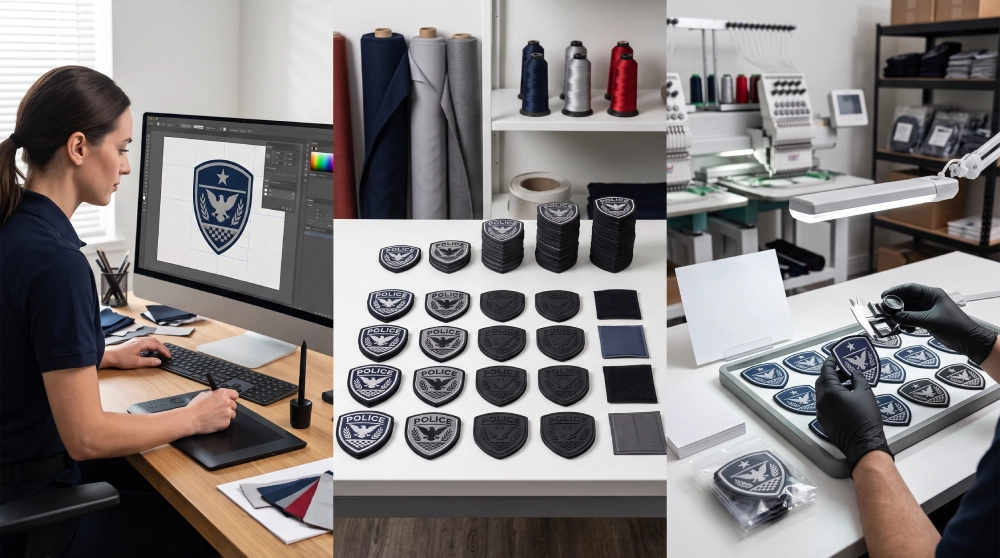
Ordering a custom patch is more structured than picking something off the shelf, but it’s simple if you go in with the basics ready.
Designing Your Patch
Most manufacturers let you design your own police patches online — you supply your seal, colors, and text, and a designer turns it into a digital proof before production, or you can build one from a template if you don’t have final artwork yet.
Buying Police Patches Online
To buy police patches online, submit your design, pick material, size, and quantity, then approve a proof. Weigh any quote against material specifics rather than price alone, since a bare-bones run isn’t a fair comparison against a full custom design.
Samples, Blanks, and Free Options
Some vendors offer free police patches as samples on qualifying bulk orders, or a stock shape customized with your design, which is often cheaper than a from-scratch mold.
Why Departments Choose Patches Studio
Patches Studio focuses specifically on uniform and law enforcement patch work, a different discipline than general promotional patches, since duty gear gets washed and worn daily for years but still needs to stay sharp and legible. The team, made up of embroidery digitizers and mold technicians from uniform manufacturing rather than promotional swag, has produced patches for municipal police, sheriff’s offices, campus police, transit and airport programs, and K9 and tactical units. Production runs through US-based facilities, with every order going through a digital proof, sample check, and final inspection; reflective patches follow ANSI/ISEA 107 visibility guidance.
Ready to Start an Order?
Have your department’s seal, colors, and quantity ready? Send them over and get a digital proof back before production begins.
Frequently Asked Questions
What is a custom police patch?
It’s an identification emblem — embroidered, molded, or printed made to an agency’s own seal, badge number, or motto, then attached to a uniform, vest, or jacket built to last for years.
Can I design my own patch online?
Yes. You send over your seal, colors, and text, and get back a digital proof before anything goes into production — with no design experience or finished artwork required beforehand.
How do velcro patches attach to a tactical vest?
They use a hook-and-loop backing that presses onto the loop panel built into most plate carriers, letting officers add, remove, or swap patches without any sewing involved.
What size is a standard back patch for a jacket?
Most back patches run around 10×4 inches or larger for distance visibility, though smaller formats are common for name tapes or secondary panels on jackets and vests.
Do patches need department approval before ordering?
Most agencies require internal sign-off for anything that appears on the official uniform. Personal morale patches on tactical gear usually skip that process, though policy varies by department.
How long does a bulk order take to produce?
Turnaround time depends on size, material and design complexity. Remember that larger orders take longer to set up and check quality so getting your artwork finalized as soon as possible will help to keep your timeline shorter.
Are iron-on patches durable enough for daily wear?
They work fine for lighter accessories like bags, but for a uniform shirt or jacket washed regularly, sew on or Velcro backing fares noticeably better over time.
What’s the minimum order quantity for custom patches?
Most manufacturers will take small runs, from a single unit to full-roster orders, though per-patch pricing drops considerably once quantities exceed standard bulk levels.
Can I get a sample before placing a full order?
Most vendors offer a free digital proof and can print a physical sample for a small fee so you can see the color, size and detail before committing to a full run.
What information do I need to provide when ordering a patch?
Typically, you will need the seal or logo file from your department, exact colors or Pantone codes, any text or badge numbers, and the size and backing type you prefer.