


Every rider remembers their first vest. For most of us, it looked about the same: a name patch, one design we liked, and a whole lot of empty leather waiting for biker vest patches.
But a vest doesn’t stay bare for long. A rally, a charity run, a long weekend trip, and suddenly there’s a patch for each one. Give it a few years, and your vest tells people where you’ve been.
That’s a big part of why riders care so much about biker vest patches. Other bikers read them fast. Wear something in the wrong spot, or something you didn’t earn, and you can send a message you didn’t intend.
We’ve been making custom biker patches for riders and clubs since 2000, and three questions come up more than any others: where should this patch go, can I wear it, and will it hold up on leather? We’ll answer all three below.
Biker vest patches are embroidered or woven emblems that riders sew onto their vests. Each one says something, whether it’s who you are, which club you ride with, a rally you finished, or someone you’ve lost. Where a patch sits matters too. The back is for club patches and rockers, while the front holds names, flags, and event badges.
Biker Patch Meanings: What Your Vest Is Really Saying
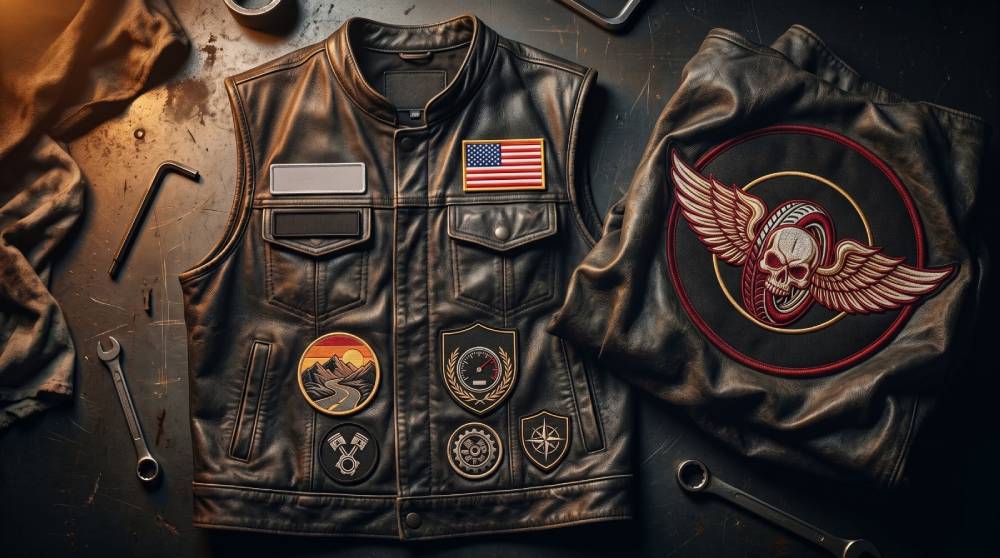
Not all motorcycle patches carry the same weight. Some are just for fun. Others mean a lot. Here’s roughly what other riders see when they look at you:
- The back patch. Riders call it “colors.” It’s the big one, and it tells people who you ride with, or who you are if you ride solo.
- Name patch. Your name or road name, on the front chest.
- Rank patches. President, Sergeant at Arms, Road Captain. These are only for the club member who actually holds that job.
- Ride and event patches. You get these by showing up: rallies, charity runs, long-distance runs.
- Slogan patches, like “Loud Pipes Save Lives.”
- Flags, usually up front.
- Milestone patches for mileage or years in the saddle. Some riders collect biker badges and patches like these the way other people collect passport stamps.
Worth knowing: nobody publishes an official rulebook. Every club makes its own rules, and what a patch means can change from one state or one generation to the next. What follows is what most riders recognize. Treat it as a good place to start rather than law.
Motorcycle Club Vest Patches: Rules No One Tells New Riders
Most of the trouble new riders get into comes down to one thing: how many pieces are on the back.
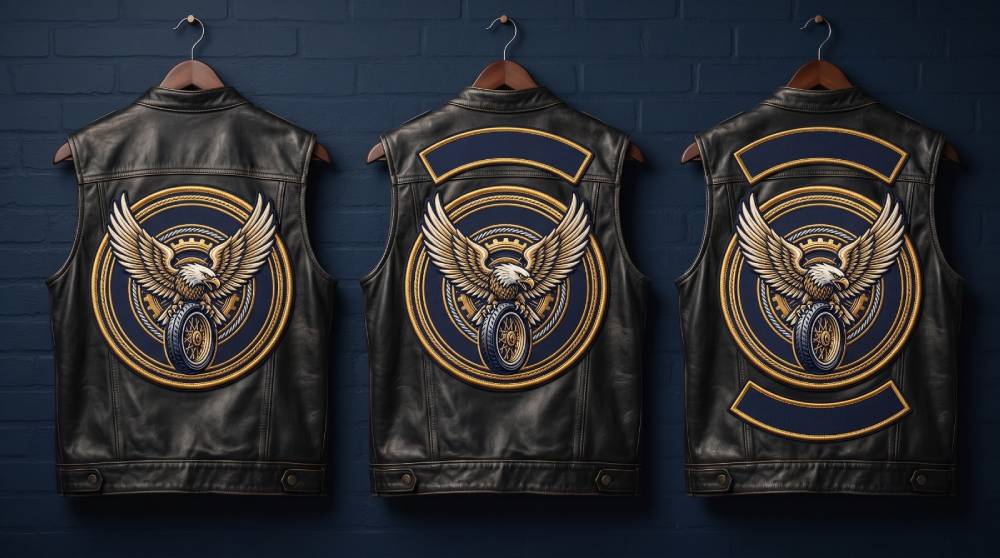
Back Patch Layouts at a Glance
| Layout | What It Includes | Who Usually Wears It | Safe for Independent Riders? |
| One-Piece | A single emblem, no rockers | Riding clubs, charity groups, faith-based groups, solo riders | Yes |
| Two-Piece | Center logo + one rocker | Clubs still establishing themselves | Not recommended |
| Three-Piece | Top rocker + center logo + bottom rocker | Traditional motorcycle clubs (MCs) | No |
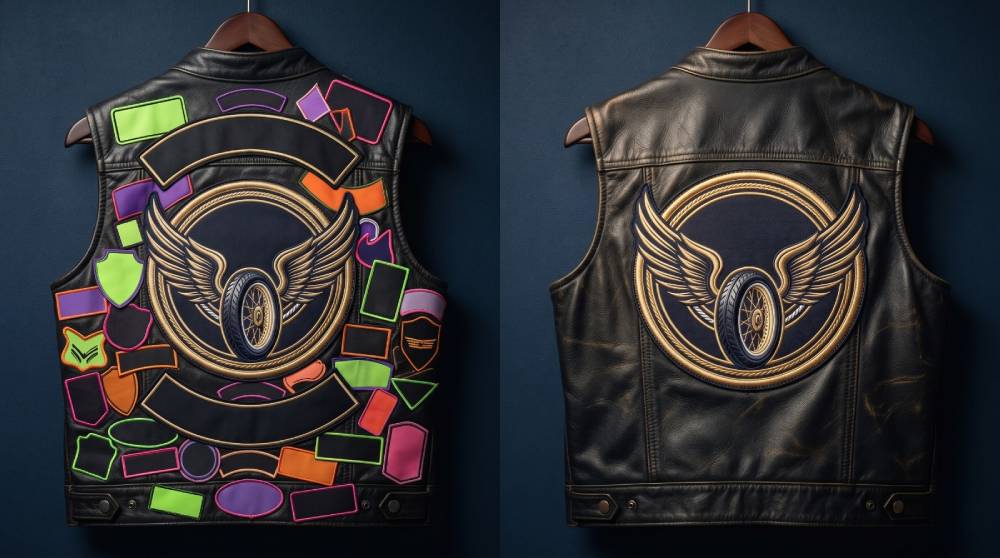
The motorcycle 3-piece patch is the one everybody pictures. Club name up top, emblem in the middle, location on the bottom rocker. The Wikipedia entry on club colors explains it well and notes that many family-oriented clubs intentionally use one-piece patches so nobody mistakes them for a traditional MC. On MC vest patches, those three pieces together mean full membership. That’s not something you buy. It’s something you earn.
Two smaller patches matter just as much. The little “MC” square or diamond tells people the group is a traditional motorcycle club and not a riding club. Then there’s the “1%” diamond. The usual story is that it comes from a remark attributed to the American Motorcyclist Association decades ago, about 99% of riders being law-abiding. Clubs wearing it are saying they’re the other 1%. Neither patch is a fashion choice. If you’re not a member, leave them alone.
Bottom Rocker Patch: The One Patch You Shouldn’t Wear
The bottom rocker is that curved strip under the emblem, and it usually carries a city, state or region. To a club, that reads as “this area is ours.”
In a lot of places, established clubs expect a new club to talk to them before putting on a rocker for their area, and people have ended up in real trouble over it. So if you ride independent, keep it simple and don’t wear one. Proud of your state? Put a state patch or a flag on the front instead.
Riding Club vs Motorcycle Club: The Difference Matters
A riding club is mostly about riding. Weekend runs, charity events, breakfast stops, good people. Joining is usually easy, and members wear a one-piece patch.
A motorcycle club is a bigger commitment. There’s usually a prospect period, the rules are stricter, and every MC patch comes with expectations attached. If your idea of club life is a Sunday ride with friends, you’re in riding club territory, and that’s how your vest should read.
Where Do Biker Vest Patches Go? Placement Guide
The vests that look great usually aren’t the ones with the most patches. They’re the ones where somebody thought about where each patch goes. Split your vest into zones, and picking motorcycle patches for vests gets a lot easier.
Biker Vest Patch Placement Map
| Zone | What Goes There | Typical Size | Pro Tip |
| Back Panel | Your main emblem | 10–14 in. wide | Center it between the shoulder blades. It sets the color palette for the whole vest. |
| Front Left Chest | Name patch, blood type patch | 3–4 in. wide | Keep your name clean and readable. This is the patch people see up close. |
| Front Right Chest | Flag, state patch, or one key emblem | 3–4 in. wide | Pick one strong patch here, not three small ones |
| Lower Front Panels | Ride, event, and slogan patches | 2–4 in. | This is the area that grows. Leave space for future rides |
| Rockers (clubs only) | Club name and location | 12–14 in. wide | Should match the center patch exactly in color and font. |
A few things almost always work. Start with your biker vest back patches, since they set the colors for everything else. Keep your motorcycle vest patches to two or three main colors. Put bigger patches lower on the front and group similar sizes together. And leave gaps. A motorcycle vest with patches jammed edge to edge is hard to read, and nothing gets noticed.
A large biker patch on the back paired with a few well-chosen front patches almost always looks better than a vest covered corner to corner.
Leather vs Denim Vest: Which One Makes Patches Pop?
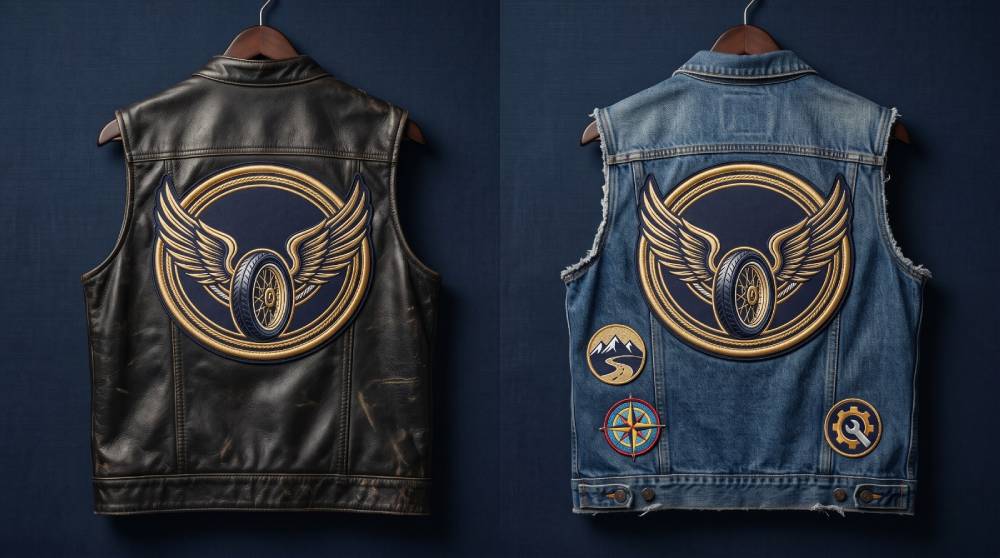
Bikers have worn leather for a long time. It lasts. A good leather vest can take years of riding and still look right, and leather vest patches stand out on it. Sewing onto it is another matter, though. It takes time, a steady hand, and a needle made for leather.
Denim is the easier option. It’s lighter than leather. It’s also much cooler on summer rides. Patches are easier to attach, and a regular needle or a home sewing machine will do the job. Plenty of riders had a denim vest before they ever bought leather. Colorful patches and vintage ones look great on it.
Plenty of people start in denim and switch to leather once they know what they want on it. The same rules apply either way, and they work for motorcycle jacket patches too if you’d rather patch a jacket. Want the leather look on a denim vest? Custom leather patches are another option.
How to Sew Patches on a Leather Vest Without Damage
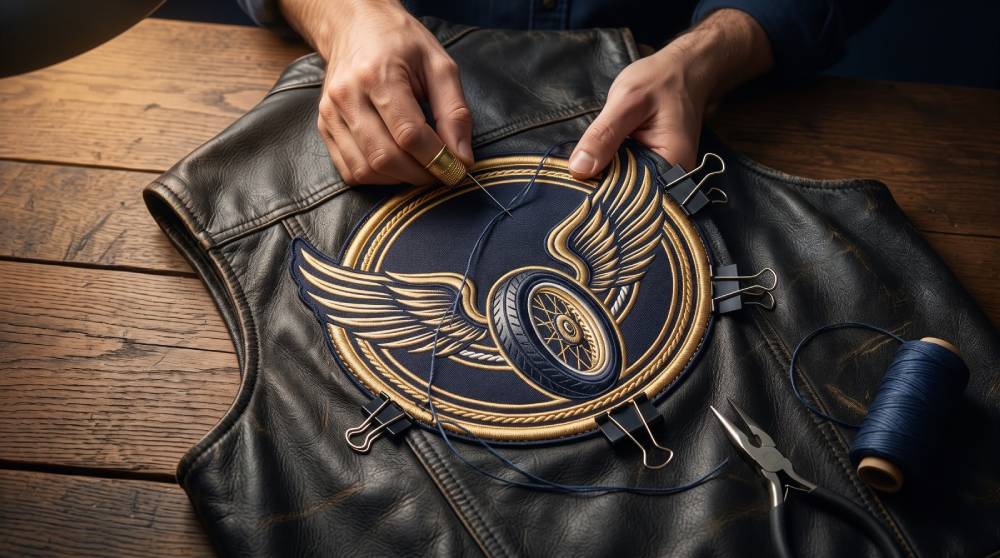
This is the question we get more than any other, so here’s the short answer first: don’t iron anything onto leather. The heat can damage it, and iron-on glue doesn’t grip leather well anyway. Most biker vest patches come with a sew-on backing for exactly this reason. Sewn patches typically hold up for years of riding.
You’ll need a leather needle, heavy polyester or nylon thread, a thimble or small pliers, and some binder clips.
- Lay everything out first. Put all your patches on the vest where you think they should go and take a photo. We usually tell people to sleep on it and check the layout again the next morning, because a needle hole in leather never closes up.
- Skip the pins. Binder clips hold the patch in place just fine, and pins would leave little marks in the leather.
- Watch out for the liner. Check whether your vest has a fabric liner inside. If yours has one, open up a few inches of that seam first, so you’re only sewing through the leather. When the patch is on, stitch the liner closed again.
- Now for the actual stitching. Stay close to the edge of the patch and try to make your stitches about the same size each time. It’s a lot easier if the patch has a merrowed edge, the thick rolled border you see on most biker patches.
- Tie off on the inside and trim.
For large back patches, consider professional help. Any leather shop can sew it on for you, and so can a lot of tailors if they’ve worked with leather before. Sew-on motorcycle patches go onto denim the same way, only much quicker. If you change your patches a lot, get a hook-and-loop panel sewn on once. After that, your patches just press on and pull off.
A tip from our design team: if the patch is for a leather vest, ask for a merrowed border. That’s the thick rolled edge you see on round or rectangular patches, and it gives your needle something solid to push through, so the edge doesn’t fray nearly as fast once you’ve put some miles on it.
Biker Patch Etiquette: 5 Mistakes New Riders Make
You won’t find these in a handbook. Most riders learn them by watching other riders.
- Wearing rockers without a club. Maybe it was just meant as hometown pride. To other clubs, a rocker still means membership, and a state rocker means you’re claiming that state.
- Wearing patches you didn’t earn. Rank patches, MC patches, and club colors belong to members.
- Copying a club’s look. Similar fonts or layouts come across as imitation, and clubs do notice.
- Wearing support patches for a club you don’t know. More on these below.
- Covering every inch. The patches on your cut should tell a story, and a story needs room.
Biker Memorial Patches: Honor a Rider the Right Way
Losing a riding brother or sister is hard. A memorial patch is one way to keep them on the road with you. Most have a name, dates, and a short line such as “In Memory Of” or “Ride Free.” A lot of riders wear them on the front chest near the heart. Others put them on the lower back panel.
Support patches are something else entirely. They show support for one specific club, and they’re generally worn by friends of that club with the club’s blessing, often bought straight from them. No real connection to the club? Then don’t wear the patch.
Veteran patches (branch emblems, unit designations, POW/MIA) honor military service. If a patch suggests you served, only wear it if you did. Non-veterans who want to show respect can go with a flag or a general tribute patch. Whatever you choose, keep it simple. Clear lettering and one meaningful symbol will say more than a busy design.
How to Design Custom Biker Vest Patches That Last

Store-bought biker patches for sale are fine when you just want something quick. But if you want a patch nobody else is wearing, it has to be custom. This is roughly what we tell every rider and club who comes to us:
- Choose the patch type first. Embroidered patches have that raised, classic texture. Woven patches handle fine detail and small text much better.
- Watch your text size. Tiny lettering tends to blur in embroidery, so woven is usually the safer call for fine text.
- Make it yours. Stay away from anything that looks like an existing club’s colors.
- Add a name patch. It pulls the whole vest together.
If you’re ordering custom motorcycle club patches with top and bottom rockers, the whole set should match in color, font, and border so it reads as one piece. And make sure your club has standing in the area before you wear a location rocker. Want ideas first? Browse patches we’ve made to see what’s possible.
What does it cost? Most custom biker vest patches cost between $1 and $5+ per patch, depending on size, type, and quantity.
Conclusion
Most riders we work with don’t finish their vest in one go, and that’s how it should be. Start with the back patch and get that right first. Leave rockers and 3-piece patches to club members, because nobody’s going to accept “I just liked the design” as an excuse. After that, add biker vest patches as you earn them: a rally you rode, a friend you lost, a road you’ll never forget. Take your time sewing them on, especially on leather. A vest that grows with you will always look better than one bought all at once.
Ready to build your vest? Send us your design idea, size, and quantity, and we’ll get back to you with a free quote. Back emblems, name patches, memorial patches, rockers: Patches Studio makes custom biker vest patches built for the road.
Frequently Asked Questions
Where do patches go on a biker vest?
Biker vest patches start with the back: center the main patch between the shoulder blades, since it sets the color palette for the whole vest. Then add your name patch on the left chest and a flag or state patch on the right. The lower front panels fill in with ride, event, and slogan patches over time.
Can I wear a rocker if I’m not in a club?
No, it’s best not to wear a rocker without a club. A bottom rocker usually carries a city, state, or region, and established clubs read it as a territory claim. Many riders won’t care that you meant it as hometown pride. If you want to show where you’re from, wear a state patch or flag on the front instead.
What does a 3-piece motorcycle patch mean?
A 3-piece motorcycle patch means the rider is a full member of a traditional MC. The top rocker shows the club name, the center patch is the club logo, and the bottom rocker shows the location. Members usually earn it after a prospect period, which is exactly why you shouldn’t copy or wear one without membership.
Can you iron patches onto a leather vest?
No, don’t iron patches onto leather. The heat can scorch it or leave it warped, and iron-on glue was made for fabric, not hide, so the patch starts peeling after a few rides. Stitch it on with a leather needle and strong polyester or nylon thread. Not comfortable doing that yourself? Any leather shop can handle it for you.
How much do custom biker vest patches cost?
Custom biker vest patches usually cost between $1 and $5+ per patch. Where you land in that range mostly comes down to size. Think about it: a big back patch takes thousands more stitches than a name tag. Woven patches are priced a bit differently from embroidered ones, and bigger orders get a better per-patch rate.
Can I design my own biker vest patches?
Yes, you can design your own biker vest patches. A rough sketch is plenty to start with, and our design team turns it into a production-ready design. Choose embroidered patches for a raised, classic look or woven patches for fine detail and small text. Just keep the design clearly yours, not a lookalike of another club’s colors.
What’s the difference between a riding club patch and a motorcycle club patch?
The difference is usually one patch or three. Riding clubs wear a one-piece patch and focus on social rides, charity events, and easy membership. Motorcycle clubs (MCs) wear a 3-piece patch with top and bottom rockers, have stricter rules, and usually require a prospect period, so membership and the patch take time to earn.
What is a memorial patch, and where do you wear it?
A memorial patch honors a rider or loved one you’ve lost. It usually includes their name and dates, sometimes with a short line like “In Memory Of” or “Ride Free.” Most riders wear memorial patches on the front chest, near the heart, while others place them on the lower back panel of the vest.
What does a support patch mean?
A support patch shows friendship with a specific club. Clubs give or sell them to people they consider friends, and wearing one signals that you have the club’s blessing. If you don’t have a real connection to the club, it’s best not to wear its support patch, since other riders may read it as a false claim.
What size should a biker back patch be?
Most biker back patches are 10 to 14 inches wide. The right size depends on your vest, so measure across the back from seam to seam before you order. Leave some space around the edges, because a patch that’s too big looks crowded. Top and bottom rockers usually run 12 to 14 inches wide.