

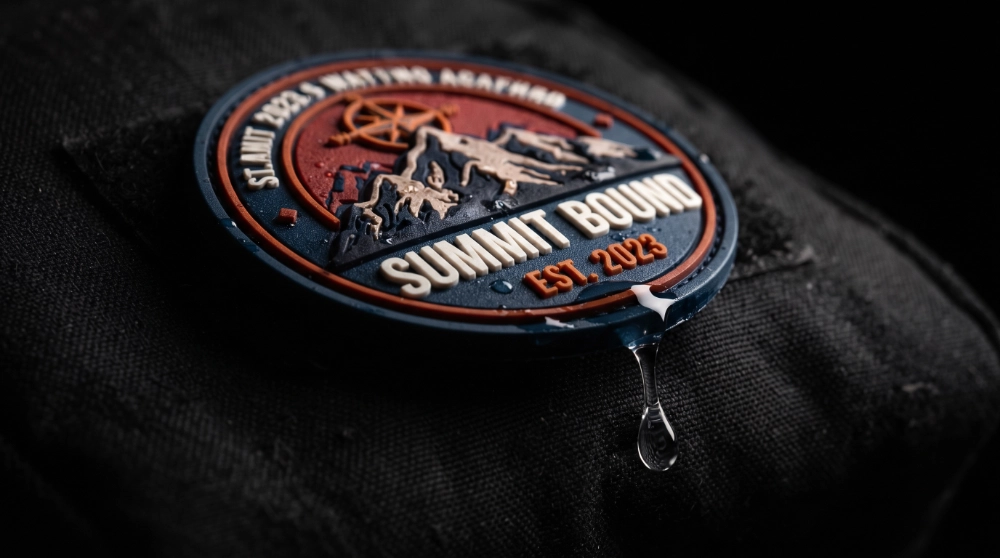
Quick answer: A PVC patch is a custom emblem made from molded polyvinyl chloride (PVC) rather than embroidered thread think of it as an evolution of the embroidery patch, made from soft rubber-like plastic instead of stitched fabric. It’s molded, not sewn, which is why it can hold sharper detail, raised 3D texture, and vivid color that embroidery can’t reproduce and why it shrugs off water, mud, and repeated washing in a way cloth patches can’t. Below: what it’s actually made of, how it’s manufactured, honest pros and cons, real sizing and ordering specs, and which backing and use case fits your project.
What Is a PVC Patch, Really?
Polyvinyl chloride (PVC) is one of the most common plastics in manufacturing the same base material used in everything from plumbing pipe to phone cases, depending on how it’s formulated. According to the British Plastics Federation, flexibility in PVC comes from plasticizers added to the resin, which is exactly the mechanism patch manufacturers rely on. For patches, manufacturers use a soft, flexible grade of PVC, not the rigid kind used in pipe. That distinction matters more than most guides mention:
- Soft PVC is pliable at room temperature, bends without cracking, and is what nearly all patch, keychain, and morale-patch products use.
- Hard PVC is stiffer and more rigid rarely used for wearable patches because it doesn’t flex with fabric or body movement, though it occasionally shows up in flat-mounted display pieces.
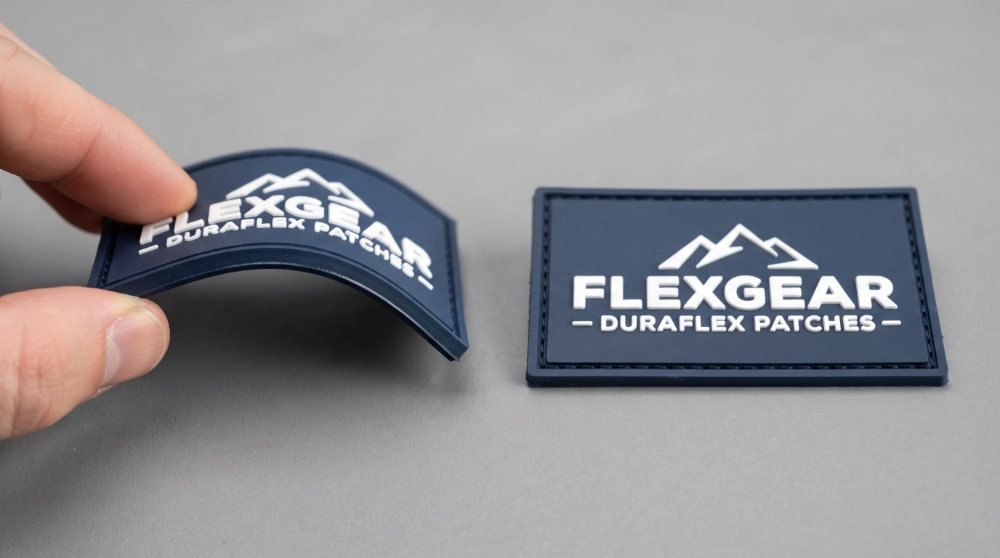
If someone hands you a “PVC patch” and it feels stiff like a hard plastic ID badge, that’s an outlier the material should have a rubbery give to it, similar to a thick silicone phone case. In our own PVC patches production, this flex is exactly what customers notice first when comparing a sample against embroidery it’s the tactile cue that tells them the material is right before they even look at the design.
You’ll also see PVC patches called rubber patches this isn’t a different product, just a different name for the same soft-PVC material, since the texture and flex genuinely resemble molded rubber.
What Is PVC Patch Material Actually Made Of?
PVC patches start as raw PVC resin, heated until it becomes a thick, moldable liquid. Pigments are mixed directly into the melted material not painted on afterward which is the reason PVC patches don’t fade, chip, or scratch off the way a painted surface would. The color is the material, all the way through.
How Are PVC Patches Made?
The process is fundamentally different from embroidery, and understanding it explains almost every practical advantage and limitation of the material:
- Digital design and mold creation. Your artwork is converted into a metal mold essentially a negative imprint of the design, with raised and recessed areas corresponding to where color and texture will sit.
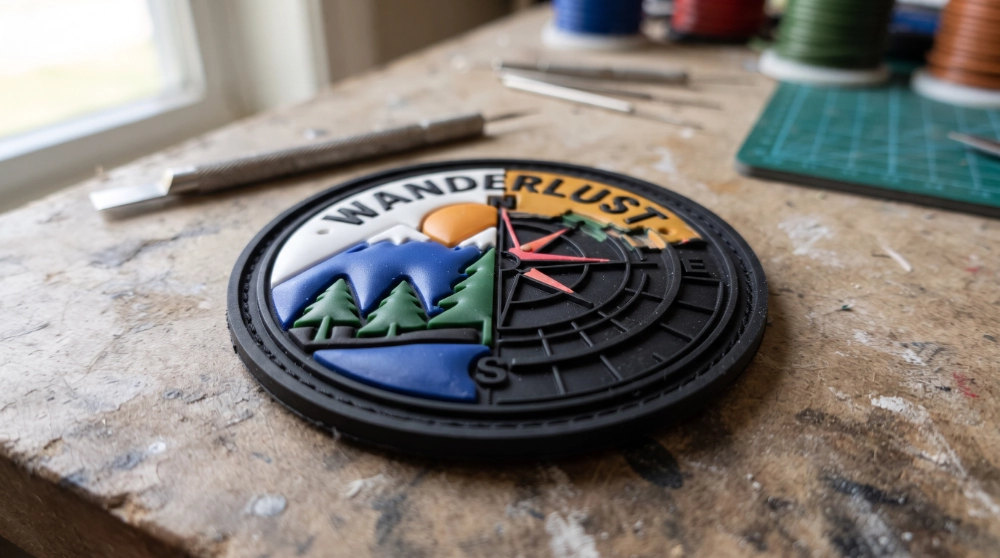
- Injection or pour-molding. Melted PVC is injected or poured into the mold’s individual color cavities, one color at a time, each separated by a thin recessed line (this is why PVC patch designs typically have visible outlines between colors it’s a structural feature of the molding process, not a stylistic choice).
- Cooling and curing. The mold cools, allowing the PVC to solidify into its final raised, textured shape.
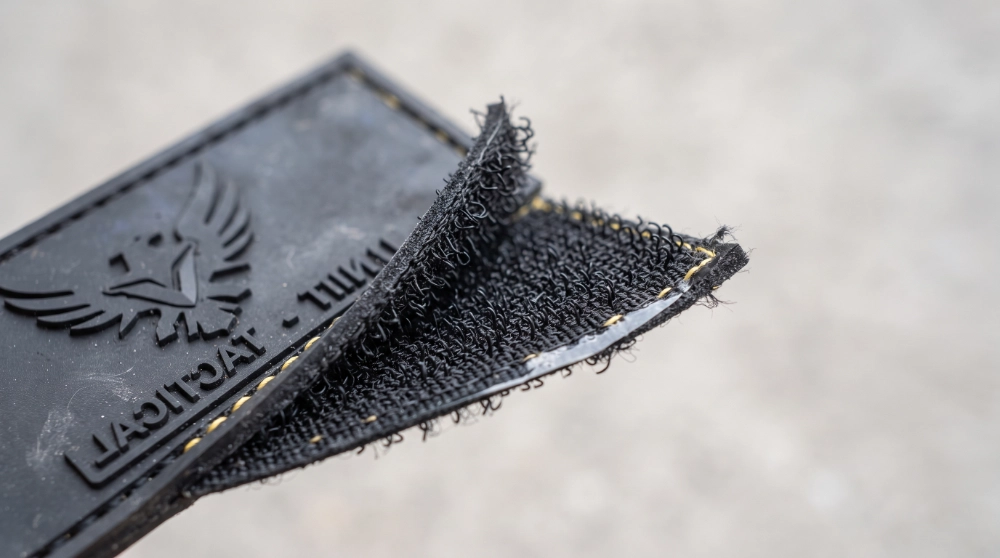
- Trimming and backing. The molded patch is trimmed to its final outline and a backing (usually Velcro) is heat-bonded to the reverse side.
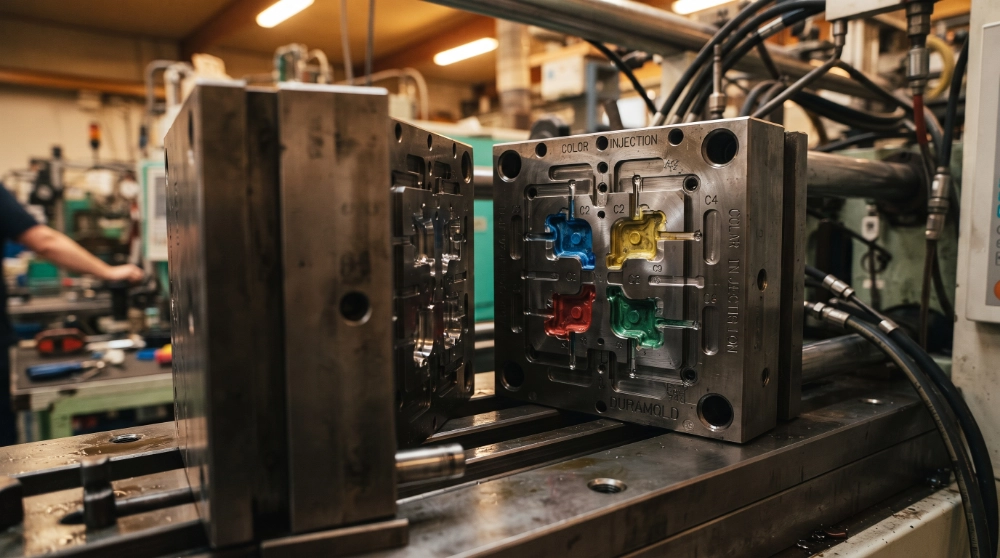
Why this matters for durability: because the design is molded as one continuous piece rather than built from individual stitched threads, there’s nothing to fray, unravel, or pull loose. Embroidery fails at the thread level a snagged stitch can unravel a whole section. PVC fails (if it ever does) at the material level cracking or splitting the entire patch which is far less common under normal wear.
(Note on DIY: “how to make PVC patches at home” searches usually lead to disappointment without an injection mold and controlled heat source, home methods can’t replicate the multi-color layering or crisp mold lines a professional patch maker produces. Small custom PVC patch runs are realistically a manufacturer job, not a craft-table one.)
The Honest Pros of PVC Patches
- Waterproof by nature, not by coating there’s no seam or thread for water to wick through, unlike embroidery, where stitching holes can let moisture in even with a waterproof backing.
- Fade-resistant because color is mixed into the material itself, not applied to the surface.
- Handles fine detail and 3D depth that embroidery physically can’t replicate raised, sculpted logos are a PVC-specific capability.
- Easy to clean a damp cloth removes most dirt, since there’s no fabric texture for grime to embed into.

The Honest Cons of PVC Patches (most guides skip this part)
- Requires a custom mold for each unique design, which is a one-time setup step embroidery doesn’t need this is why a first-time PVC order takes a little more lead time than an embroidered one, even though reorders of the same design move faster since the mold already exists.
- Higher order minimums than embroidery, generally, since the mold-creation step makes very small runs less economical. Some manufacturers (including many offering “no minimum” custom PVC patches) have brought this down significantly, so this is increasingly a shop-by-shop factor, not a fixed rule.
- Heavier and stiffer than embroidered patches noticeable on lightweight fabric like a thin t-shirt, where a PVC patch can visibly change how the fabric hangs.
- Fine text and thin lines can blur if the patch is too small the mold has a minimum feature size below which detail simply won’t resolve cleanly. If your design has small lettering, size up rather than trying to shrink the whole patch.
- Not biodegradable a real environmental tradeoff worth knowing if that matters for your brand.
Best Uses for PVC Patches
PVC Patches for Hats
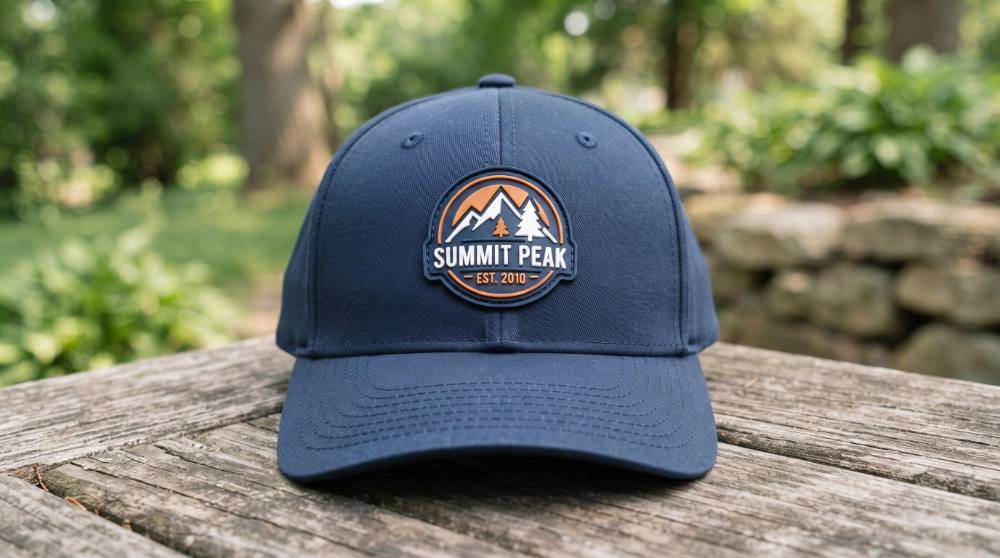
Hat panels are curved, low-flex surfaces, which actually suits PVC’s stiffness well unlike a jacket sleeve that bends constantly, a hat crown holds a PVC patch’s shape without stress-flexing it repeatedly. This is one of the most common applications for PVC hat patches, especially for brands wanting a raised, 3D logo that stands out at a glance.
Tactical & Military PVC Patches
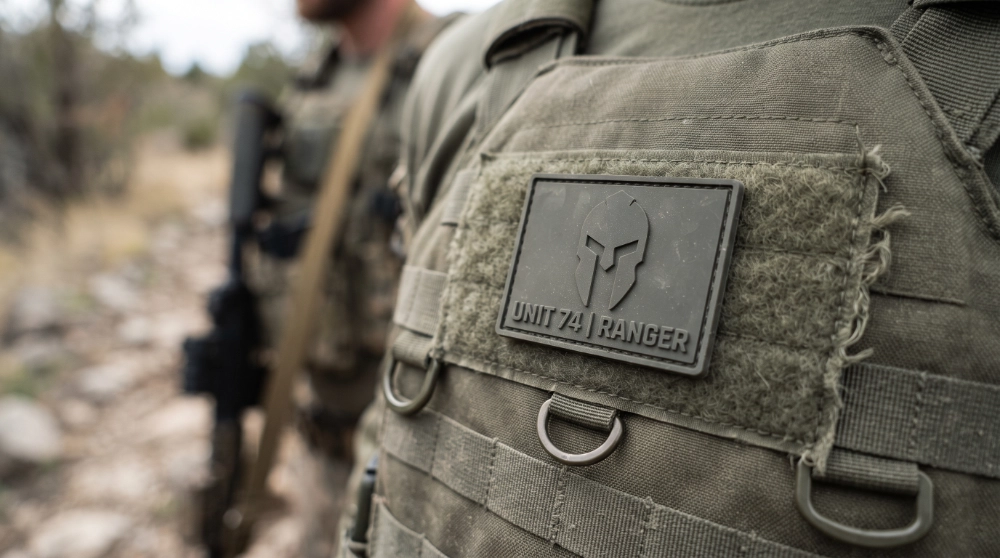
This is where PVC’s core strengths waterproofing, fade resistance, and durability in harsh conditions matter most in practice. Tactical and military PVC patches are typically paired with Velcro backing specifically so they can be swapped between uniforms, gear, or units without re-stitching. Subdued (muted, low-visibility) color options are common in this category for operational reasons.
PVC Velcro Patches
Velcro is the default backing for PVC for a practical reason: PVC’s smooth surface doesn’t hold stitches as securely as woven fabric does without pre-punched holes (more below), so hook-and-loop backing sidesteps that limitation entirely while adding the benefit of interchangeability.
From Our Production Experience
When reviewing a new patch design, one of the first considerations is how and where it will be used. If a design is intended for outdoor environments, heavy daily use, or requires raised 3D details, PVC is often the preferred material because it resists moisture, dirt, UV exposure, and abrasion better than traditional embroidered patches. Selecting the right backing, thickness, and edge finish at the design stage also helps ensure the finished patch performs well throughout its intended lifespan.
Backing Options: Velcro, Sew-On, or Iron-On?
- Velcro (hook & loop) by far the most common PVC backing, for the reasons above. Best for gear that needs patches swapped or removed; our custom Velcro patches line covers this pairing specifically for tactical and uniform use.
- Sew-on PVC patches possible, but requires the manufacturer to pre-punch small holes around the patch’s border during production, since a needle can’t reliably pass through solid molded PVC otherwise. If you know you want sew-on, say so before the mold is made retrofitting holes after molding isn’t really feasible. We offer sewn backing as a standard option for this reason, alongside self-stick and hook & loop.
- Self-stick (adhesive) a peel-and-apply option for lighter-duty or temporary placement, without needing an iron or needle at all.
- Iron-on technically available from some makers, but far less common, since PVC’s higher melting sensitivity makes it a worse match for direct iron heat than fabric-backed patches. If iron-on matters to you, confirm directly with your manufacturer rather than assuming it’s standard.
Ordering Custom PVC Patches: What to Actually Expect
- Minimums: Patches Studio’s standard PVC patch minimum is 100 pieces per order.
- Sizing: Size range also varies by shop; ours runs from a 4-inch minimum up to 19 by 19 inches on the high end, which covers everything from a small hat emblem to a large back patch.
- Design complexity: Simple, bold shapes with clear color separation reproduce best. If your logo has fine serif text or thin overlapping lines, ask your manufacturer whether the design needs simplifying for PVC specifically it’s a different set of constraints than embroidery digitizing.
Production tip: One lesson learned over years of PVC patch production is that small design adjustments made before molding can have a significant impact on the finished result. Fine text may need to be slightly enlarged, very thin lines can be reinforced, and spacing between raised elements should be carefully reviewed so the mold reproduces every detail cleanly. Addressing these details during artwork approval before the mold is cut improves both appearance and durability once production begins.
PVC vs. Other Patch Materials – Quick Comparison
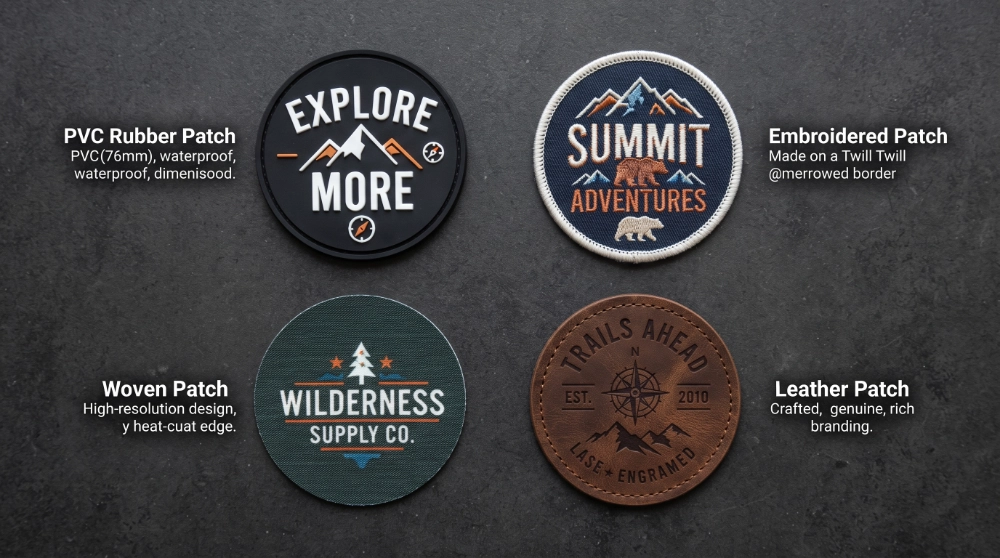
| PVC / Rubber | Embroidered | Woven | Leather | |
|---|---|---|---|---|
| Waterproof | Yes, inherently | No (unless backed) | No | Water-resistant, not waterproof |
| Best for fine detail | Moderate (bold designs) | Low (texture limits detail) | High (thin thread, sharp detail) | Low-moderate |
| 3D raised texture | Yes | Slight | No | No |
| Common backing | Velcro | Iron-on, sew-on | Iron-on, sew-on | Sew-on, adhesive |
Frequently Asked Questions:
What is a PVC patch made of?
Soft, pliable polyvinyl chloride (PVC) resin, colored by mixing pigment directly into the melted material before molding not painted on afterward.
How are PVC patches made?
Your design is converted into a metal mold, melted PVC is injected or poured into the mold one color at a time, the piece is cooled and trimmed, and a backing (usually Velcro) is heat-bonded on.
Are PVC patches waterproof?
Yes inherently, because there’s no fabric or thread for water to seep through, unlike embroidery.
Can PVC patches be sewn on?
Yes, but only if pre-punched stitch holes are added during manufacturing. A needle generally can’t pass through solid molded PVC after the fact.
What’s the difference between PVC and rubber patches?
Nothing meaningful “rubber patch” is a common alternate name for the same soft-PVC material, based on how it feels rather than a different manufacturing process.
Do PVC patches work well on hats?
Yes hat crowns are a low-flex surface that suits PVC’s stiffness better than a garment that bends and moves constantly, which is why PVC hat patches are a popular application.
Choosing a PVC Patch Maker: What Actually Matters
If you’re comparing suppliers, the honest checklist looks like this:
- Can they show you a digital mold proof before production this is where fine-detail issues get caught early, before a mold is cut.
- Do they disclose minimums clearly, including whether “no minimum” applies to first orders or only reorders.
- Do they ask about backing needs (Velcro vs. sew-on) before molding a manufacturer who doesn’t ask this upfront may not be accounting for stitch holes if you’ll need them.
- Can they speak to design simplification if your artwork has fine detail that won’t mold cleanly, rather than just producing it as-is and letting you discover the problem on delivery.
A PVC patch is a genuinely durable, weatherproof option when the material fits the job hats, tactical gear, outdoor equipment, anything that needs to survive real wear. It’s not automatically the “premium” or “better” choice over embroidery or woven patches; it’s the right choice for a specific set of conditions, and understanding the actual manufacturing process is what tells you whether your project is one of them.
Related reading: if you’re weighing PVC against a different material for a heritage or premium-brand look, see our guide to building a brand identity with custom patches; if you’re specifically comparing Velcro-backed options for flags or tactical use, our flag patches guide covers backing and placement rules in more depth.
Ready to move forward with a design? You can request a free PVC patch quote and get a digital proof before committing to production.
Article by the Patches Studio team. Patches Studio has been manufacturing custom embroidered, PVC, woven, leather, chenille, and Velcro patches since 2000, and the production details in this guide mold minimums, sizing, and backing options reflect our own current specifications rather than industry averages.